
Forging an Insurgent Jurisprudence
Remembering K. G. Kannabiran

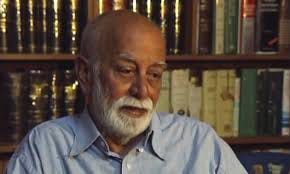
(This short article is to remember him on his fifteenth death anniversary.)
“I am Sisyphus. I keep rolling the boulder uphill.” He said with a characteristic chortle and twinkle in his eyes in one of his interviews.
How does one imagine law for human rights? Kannabiran’s life had that task cut for it. In anxious polities that espouse an urgent desperation for securing political order by any means, being a civil liberties lawyer is the curse of Sisyphus. For anyone who imagines an order different from the state version, that imagination comes at a great cost. Belief in such an order is condemned. Association with such a cause is unlawful. Wielding force to challenge the order is an invitation to the ruthless wrath of state violence. The human-citizen nexus snaps right there. Kanna sought to dwell in that snap, nurse the wounds and nurture a reconciliation. He did this as a lawyer activist. How does one respond to that violence through law? How does one situate the human spirit in law to wield it for resistance? Kannabiran leaves some answers for me, for us.
Liberal order is a transcendent ideal, the idea that all humans carry within them the spark that seeks and deserves freedom. It exists as an abstract ideal that must be stealthily and jealously guarded. However, for historically mangled polities, liberties are often a top dressing on deeply illiberal and unequal soil. Liberal order is then a disappointing phantom, a ghost. It is challenging to resist mass disillusionment in the liberal order without suppressing it. Any ambitious liberal order must contend with its biggest paradox. How does the liberal state treat those who do not have faith in the liberal state for independent rational reasons, including often to guard their own liberties? In its historical-political form, where masses have been excluded from property, prosperity and dignity, this question is accentuated. That tension puts most liberal thought into an animated suspension. This is Kanna’s, as any other human rights practitioner’s, serious dilemma. How to wield liberal legality to undo the unequal conditions and illiberal practices? Kanna made this tension generative and weaved a human-rights practice around it in times when the Indian State turned to aggressive violence to secure order. Kanna had two instincts that he had to balance. He wanted to believe in the liberal order and use it for resistance, but also wanted the law to upend the existing conditions of deprivation and indignity in which this order survived. These tensions, whose answers are unknowable in theory, must be grappled with through experience and practical judgment, and so he did.
To Kannabiran, if the question of the rule of law is suffixed with “of whom”, the idea loses its meaning. Constitutional Governance then folds into government impunity. The rule of law was the gift of the bourgeois system, and he believed in it. However, at the same time, he sought to make the law a site for insurgent jurisprudence. Uncovering a transformative vision in the text that would embarrass a conservative judge. “Unless courts are counter-hegemonic, justice can never be done... Justice and rule of law in the caste society are partisan by definition”, he would say. How do we imagine a liberal judge who upholds the rule of law but at the same time seeks to transform political conditions?
He had at least two means of resolving this tension. First, by emphasising that no matter what it is faced with, the state must hold itself to the rationality embedded in the legal procedure. And second, this rationality must also pave the way in substance to accommodate the human predicament. The second was an attempt to re-situate the people and their human instincts back into the law. He would emphasise that the “consent” in the Lockean social contract was not permanent and unconditional. He embedded both procedure and substance into moral empathy guided by constitutional morality. Moral culpability then had to factor in a range of human experiences and subjectivities and guide our intuition of law.
He bridged these with what appears to be a moral ideal of truth. Of the kind Gandhi and Ambedkar invoked. An idea that rose above politics and law. The idea that guided our sense of fair and unfair and just and unjust. The idea that spoke to the “humanness” of experience. Kanna sought to have human feelings to bear on the law. Thus, when arguing for communist insurgents, he read out to the judge passages from the Communist Manifesto. The legal system, to him, was running on the judges’ and lawyers’ willingness to educate themselves about the human condition. He argued that “while communists share a sense of urgency for revolution, it is never meant literally.” In another case, he sought to argue that a death sentence must not be granted to political assassins: “where people act out of genuine and passionate motives according to their conscience, and not for their own benefit, they do not merit extreme punishment.” In courtrooms, he was not afraid to experiment— demonstrating that spiritual powers are sham in court, in the Premananda case or recital of impugned anti-state poetry in the High court to defend the right to speech of Virasam poets—he brought judges to lean into these experiences.
One of his most important insistences was that we must take the constitution to the trial courts. The taluk court would hear us for two to three days, a luxury unavailable in higher courts, he would say. Over time, we would have enough judges in the taluk judiciary who can take constitutional arguments about criminal law seriously. On one occasion, Kanna asked a TADA Court sessions judge if he was willing to resign for having said that the Constitution were not the concern of subordinate courts. When threatened with contempt, he ended up engaging for an hour with the relation between the constitution and criminal law in the court.
To him, human-ness was the core of legal validity. Civil rights were rights inherent in every person. Any ruler, state government or constitution only confirmed, respected and guaranteed the protection of inherent rights of persons. It was membership of the political society that, by itself, conferred self-respect and dignity— not the law, which was tasked only with securing them. Justice, as per the constitutional value system, in his view, was not just about all institutions under the constitution in their relationship with the people, but also a “moderating force of all human relationships.” Peace was the collective right of all people.
Preventing impunity, legitimate power, and law were to be spoken of in the same breath or not at all. The movement for human rights was a struggle against misrule and unconstitutional governance. Of impunity, he wrote:
“Impunity is never the answer. This sanction of impunity throws into question the legitimacy of governance and order and points to decay in the system. It is a matter that calls for a national debate. Unless human rights becomes part of political activity, unless human rights discourse forms part of the substrata of our political arrangements, we will have no road to civilised governance.”
Speaking Constitution
Kanna was also a death sentence abolitionist. He observed that in conferring death sentences, the rule of law operated in a paranoid state. Death sentences were antithetical to the premise of the rule of law. He would argue that society lacked the collective moral competence to put anyone to death. If premeditation made an offence more serious in criminal law, the death sentence was a collective premeditation by the entire political society to end a life. Borrowing a leaf from Camus, he urged:
Capital Punishment is the most premeditated of murders to which no criminal deed however calculated can be compared. Public premediation known to a future victim is a source of moral suffering more terrible than death.
A believer of civil liberties, who opts into law as their means of contending the meaning of ‘order,’ does not have at their disposal the primary means of tweaking order: namely, force. What they have at their disposal are values, rhetoric, public reason, and faith in one’s conviction. Kannabiran engaged with the most urgent questions of order in this manner: characterising encounters as murders, resisting tribal oppression, entering appearance for encountered naxals, defending free speech of revolutionary poets, challenging the emergency, terror and state of exception, contesting death sentences, resisting genocides, abhorring closed in-prison trials, delineating the relation between conspiracy and right to association, critiquing federal control of violence and all things involving the state, freedom, dignity and the human condition. He fused criminal law, philosophy and history and human rights practice with astute brilliance.
Of all Kanna stories, my favourite is the one when he was appearing for a Naxalite in the High Court. The judge asked: Mr Kannabiran, why should Naxalites who do not believe in the constitution take shelter under it? Kanna was prompt, like this question formed the spine of his moral personality: “When such issues come before the court, it is your values and not their values that are on trial. It is the values of the constitution and the values of the state that are under test.” To him, the faith in one’s own conviction means that we must accept the rational consequences of that conviction, even for people who don’t accept its premise.
As a question of political judgment, it is very difficult to locate Kannabiran on any spectrum that asks how much violence was justified against violence. He perhaps did not believe in any arithmetic. He resisted violence by impressing the necessity of dialogue. “In stating a perspective, the object is never to support or condemn different sides or even to take sides”, he said. This Gandhian strain is characteristic of his engagement with the law and provided him with sufficiently diffuse moral courage and strength without being forced to pick sides. That made Kanna the natural choice to negotiate with the Naxals when they kidnapped a group of bureaucrats. He lamented that “Indian Politics has not produced any leader in the last fifty years with sufficient moral stature to intervene and prevent incidents of acute violence.” He unknowingly embodied the qualities of such leadership.
Kannabiran did not deny briefs from anyone. Many times, the accused would just name him as their advocate before the court, and he would enter an appearance for them. Sometimes he got paid, but mostly he did not. Kanna led and participated in committees for fact-finding on encounters and state violence. These, he believed, presented alternate avenues for uncovering truth and forging a new politics of state-violence. These avenues would provide people with a claim to ‘truth’ and moral courage. He fought that battle for three decades until the Indian Courts finally recognised that encounters had to be registered and investigated as murders.
A lot of advocacy hinges on knowing when to stay silent and when to speak. Kanna himself would acknowledge that the legal profession imposes a duality on its practitioners. They must inhabit two moral worlds. One of their client and the second of their own. The permeability of one world into another is one of the most difficult parts of being a lawyer. He intervened, often driven by a personal moral conviction, to remind the profession to reflect. A few instances are worth highlighting. When the bar abandoned Afzal Guru and his co-accused and denied them representation, he condemned this in a letter in unequivocal terms. Barring advocates from representing clients to him was an uncivilised and communal method of functioning. On another occasion, when a Sikh accused in Karnataka, presented before the High Court, stated that he had written to the Punjab Government for protection, the court broke into laughter. Kanna intervened to soberly remind the court that he had to write to the Punjab government because he lacked faith in the Karnataka Government due to its communal intentions. That to him was a cause for introspection.
While inhabiting this dual moral world in a politically charged climate, coupled with state impunity and the fact that most of his clients were Naxals, at least some of whom would refuse to be represented before bourgeois courts, his political predicament must have been a walk on thin ice. Yet he was cautious to note that progressive politics came at a cost: namely, to exercise the duty of care to ensure we do not act in a manner prejudicial to progressive politics. He was surveilled by the state, threatened with violence against himself and his family. Yet he continued to impress himself and his politics on the world in the shade of law. Kanna could call a spade a spade. Kanna attacked most politico-legal moments of importance without mincing words or without any partisanship. The Emergency, the Mandir movement, the Gujarat 2003 genocide, the Mumbai 1993 genocide, the violence of the Naxal movement, the Sikh genocide of 1984, the Niyogi Murder and the acquittal of only the industrialists, likening the PoTA to the Rowlatt Act and likening the death penalty to state-sanctioned murder; he expressed what he felt and acted on it.
Like legal outlooks, Kanna also inhabited different writing styles. He could write a first-person letter from the perspective of Sanjay Dutt and equally well an exceptional genealogy of civil liberties in India. His references were wide-ranging. For instance, when arguing the parliament attacks case, he argued that no attack on any building could constitute “waging war against the state”. To buttress his case, he relied on the case of the burning of the German Reichstag. Camus, Kundera, Laski, American writing from the civil liberties movement, international human rights movement and laws and legal theories all formed a part of his repertoire. Some days, he was at his polemical best:
Criticism of the government or participation in protest will lead to prosecution for sedition and other offences against the state, or even arrest under preventive detention or a more regressive law. Criticism of Parliament while it is in session invites contempt for breach of privilege. Speaking or arguing loudly in a court invites contempt. And yet, a corrupt and callous bureaucracy cannot be called to account because the government of which they are the key players must permit prosecution.
Ultimately, it is these various forces that have ganged up to put an end to the Constitution, with nobody even prepared to lament its demise. What we as citizens have really been guaranteed is the fundamental right to be spectators, and to be taxed directly and indirectly for witnessing this entertainment.
Wages of Impunity
He said: I am sure even Sisyphus must have dreamt that he would roll the stone to the hilltop someday, and I, too, believe that. He did believe in chipping away at state oppression, one victory at a time. In his life and work, we find the inspiration to keep chipping away. One victory at a time. His extraordinary life, even in its mundane elements, continues to inspire us.
“When people turn sixty, they retire, turn to the scriptures, go out only to attend religious gatherings and then return home. There are no problems or tensions that way. But when you have chosen my kind of life, it is very difficult to retire. I keep thinking of retiring, but I am not able to. I do a lot of writing which I never used to find the time for. I sit at the computer and type up my articles using one finger. I do everything the difficult way; that is my style.”
Resources:
Kannabiran Memorial Lectures: Upendra Baxi, Nitya Ramakrishnan, BB Mohan, Chandru J, B Nalin Kumar
Wages of Impunity, K. G. Kannabiran; selected writings.
Speaking Constitution, K.G. Kannabiran; his oral memoir. Review
Friend of the Court Podcast — Episode 3, K G Kannabiran
Kannabiran in the EPW on Encounters (1, 2, 3), Unlawful banning of PWG (1, 2), Selection of Judges, K G Balagopal, Institutional Decay, Preventive Detention, Repeal of PoTA
Tributes: A Collosus of Human Rights , The Insurgent Jurisprudent, Twilight of Human Rights in India
What a great read