
Maharashtra Black Magic Act
A Critical Overview of the Statutory Scheme

Those familiar with the Act may skip to the Argument Summary.
One of the earliest Black Magic sensations in Maharashtra was the Manwat murders in Parbhani. The accused approached quacks who advised them that the only way to bear children was to sacrifice virgin girls to the ghost of Munjaba that resided in the Peepul Tree, and accordingly, five girls under the age of ten were killed, and blood was extracted from their private parts to be sprinkled on the tree as “naivedyam.” For those of us who may be surprised, black magic continues to haunt the Indian criminal scene. (See 1, 2, 3, 4, 5 )
The recent Mr Kharat incident in Maharashtra has become a national embarrassment and exposed Maharashtra’s Godman Problem. Maharashtra has had a sustained, vociferous movement against black magic and exploitation by self-proclaimed Godmen; a struggle of reason against exploitation. [see in Anand Patwardhan’s documentary Reason Part 1, Part 2] There is much to be said about the depraved Godman-Political nexus in Maharashtra that runs deep and runs on mutual blessing and their modus operandi. There is also much to be said about Reason, Religion, Exploitation and Magic itself. However, much more able and courageous minds than mine in the rationalist movement have written and spoken about these. The Kharat incident offers an important occasion to revisit the statutory scheme of the Black Magic Act.
Introduction
The Maharashtra Prevention and Eradication of Human Sacrifices and other Inhuman, Evil and Aghori Practices and Black Magic Act, 2013 (hereafter ‘black magic act’) was enacted after a protracted struggle by the Rationalist movement[1] in Maharashtra.
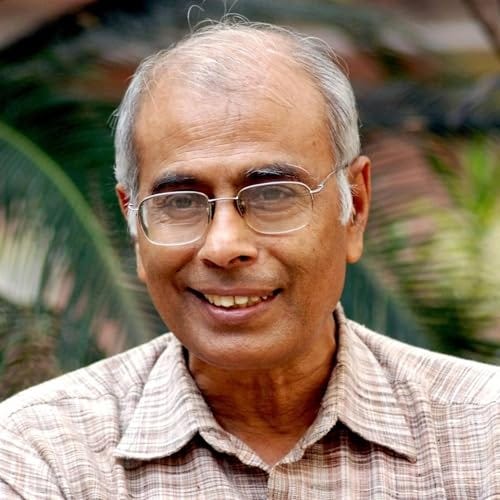
Dr Dabholkar, whose work and memory continue to inspire us
The original draft bill had within its scope a wide range of superstitious activities, which, however, were later tempered and balanced with the fundamental right to religious faith and conscience and watered down to make political concessions to the Fraudulent Babas and their ilk. The act, in its current form, therefore came with much deliberation and left a range of actions outside its ambit. The bill was first notified as an ordinance and then passed in the assembly, finally in 2013, becoming the first legislation of its kind in the world. This act was also translated from the original Marathi into English and has been bodily lifted by some other states to create their own version of this act.
It has been twelve years since the passing of this act, but judge-made law has not developed sufficiently for a doctrinal analysis. Most cases available in the High Courts are bail applications and criminal writs for quashing. While the NCRB does not record data for Black Magic offences separately, anecdotally, the conviction rates have been low, with poor understanding of the act cited as a common reason. In Pune, out of 58 FIRs under the act, no accused got convicted[2]. Proponents of the act have primarily blamed poor training of police for the failure of this act. The police, too, have sometimes registered complaints in cases where no such offence was made at all: for instance, in cases of fraudulent caste certificates, marital disputes, the accused cutting hair of the alleged victim in the name of black magic, and the like. The courts have not considered the non-bailable offence created under the act and proceeded to grant bail before completion of the investigation, too. This enactment has received little academic attention despite its radical emancipatory potential.
A cursory history of legislation pertaining to criminal superstitious practices would be useful. Amongst the first of these was the Bihar Prevention of Witch Practices Act, 1999. Following Bihar(1999), Jharkhand(2001), Assam(2015), Chhattisgarh(2005), Odisha(2013), and Rajasthan(2015) have made laws prohibiting witch-hunting and a central legislation was also tabled[3] as a private member bill but could not be passed. The Maharashtra act however, was comprehensive and had an express purpose of social communication about Black Magic and defining offences at a specific level. It penalised twelve instances of rationally unfounded behaviour that led to physical or financial injury. This model law has also been modified and enacted in Karnataka, but without modification in Gujarat. The same model law is pending consideration in Haryana, and Kerala is reworking its bill. A private member's bill on this was also presented in the Rajya Sabha.
Argument Summary
In this article, I argue that at least some of the poor implementation of the act stems from its shoddy drafting. Other states have indiscriminately copied the Maharashtra statute, carrying its confusions into their statutes. The offences in Black Magic Statutes were sought to be defined precisely to avoid false prosecutions by the police; the current style of drafting, however, adds to the confusion rather than removing it. The statutes’ connection with BNS and other related statutes that the police are familiar with have hitherto not been laid out clearly. I will solely analyse the text of the statute in the light of the history, preamble and the objective of the act to clarify some preliminary confusions regarding this act. I will also demarcate the provisions of the act to understand the relation of these offences with offences already under IPC/BNS. I will highlight those offences that do not correspond to BNS separately. I will also study other offences operating in conjunction with BNS and analyse some defences available under BNS. While grouped as twelve offences, the schedule has over 30 specific acts that are punishable. The objective of this article is to clarify some aspects of the act and convert the 12 schedule offences given in the act into a coherent scheme of offences consistent with the BNS. This exercise would be fruitful and useful to police, legal officers and other states reframing or adopting a version of this act. With this article, I wish to start a conversation about the gap between the potential of this idea, its statutory form and its implementation. This act has provided a crucial anchor to the Rationalist and Anti-superstition movement in India after the passing of Dr Dabholkar and Com. Pansare. Nothing in this article must be read as a criticism of the act itself, but only of its statutory design. This is then not an argument against the act, but an argument for strengthening it through cogent design.
Scheme of the Act
The preamble of this act demarcates that the act has primarily four purposes: i) Promoting awakening and awareness against ignorance against claims of magical powers and other practices ii) protection from injury, exploitation caused by sinister design on conmen in the name of supernatural power or evil spirits iii) combat and eradicate human sacrifice, and other inhuman, evil, sinister and aghori practices iv) prevent damage to belief in authentic and scientific remedies and cure. These provide necessary interpretive guidance.
One salient feature of this act is that the complaints under this act have to be made to a designated vigilance officer, not under the rank of Inspector of Police appointed as such by the government for each police station. In Maharashtra for Commissionerates, the officer is an ACP and for other districts, the officer in charge of the Local Crime Branch. The Vigilance Officer has also been granted power for search and seizure at all reasonable times, subject to the procedure that becomes necessary when a warrant under S.97 BNSS is issued. Further, one crucial difference between an offence under this act and a corresponding offence under the BNS is that an FIR under 5(2)(i) of this act is actionable only if filed by the victim or his family; while under the BNS, a complaint for a cognizable offence can be filed by any person to whose knowledge the offence comes. While these safeguard is necessary for some offences, for “claim only” offences [see schedule 1] such safeguards must not be necessary.
There already exist some provisions covering supernatural offences in extant criminal law. For instance, BNS S. 171, 354 also cover some offences related to divine displeasure. The Drugs and Magic Remedies Advertisement Act also operates in conjunction with the act. The Black Magic Act is routinely invoked with a range of BNS offences and some of the offences listed herein can be said to already have been covered by S. 45, 50, 55 (Abetment), S.61 (Criminal Conspiracy), S. 64 (Rape), S. 69 (Intercourse by deceit), S. 74, 75, 76 (Sexual Harassment and Assault), S. 86 (Cruelty), S. 96 (Procuration of Child), S. 103, 109 (Murder), S. 105, 110 (Culpable Homicide) and S. 114 to S. 120 (Hurt), S. 126 (Wrongful restraint), 127, S. 137 (Kidnapping), S.138 (Abduction), S. 303 (Theft) S. 308 (Extortion), S. 318 (Cheating) and S. 351 (Criminal Intimidation). These cases frequently would also involve general defenses as in S. 14 (Mistake of Fact), S. 22 (Act of Person of Unsound Mind) , S. 25 (Act not intended to cause death done by consent), the idea of consent in S. 28 and S. 29 (Consent under fear or misconception) and threat in S. 32 (Act compelled by threat).
What do the special offences under this act do in addition to the existing offences under BNS as enumerated?
Definition of black magic or aghori practices and S.3 of the Act
The definition of offences in an umbrella act tying disparate acts with a common orientation is a challenge. The offences under the black magic act are not defined, neither in definitions nor as distinct sections, but are prescribed as a schedule. The black magic act does not attempt to exclusively define ‘human sacrifice’, ‘aghori practice’, ‘inhuman practice’ or ‘black magic’. Nor does it organise thematically on the issue of superstition by the type of injury caused. The act recognises that by themselves, no matter which way is defined, all acts related to black magic cannot all be criminally culpable. The act prescribes to the last detail, a list of 12 combinations of injury and supernatural claims that would constitute offences and makes all of them punishable under S. 3(2), 3(3). The Goondas Act provides a useful contrast. There, the offences are proscribed as per the class of offence. Various classes of offenders are then described in relation to the specific offences committed under specific acts they have committed. Further, offenders are punished for any act to give effect to their specific class of offence, but in a manner that offends “public order”.
The reason for the peculiar drafting style has important historical reasons. One crucial requirement in framing was that the act also needed to guard against an interpretative expansion and abuse by the police. Further, this act had to respond to social and political pressure to clearly exclude some acts of faith from its remit, as done in the savings clause S. 12, and only punish precise combinations of superstitious acts causing specific injury. The act also needed to ensure that the definitions are not over-inclusive to avoid a future art. 19(1)(a), 19(1)(g) and art. 25 and art. 26 constitutional challenges. This choice of framing has come at a substantial cost to clarity and legibility in the existing criminal system. Let’s now turn to the definitions and S.3 itself.
S. 3(2) of the black magic act defines the offence as “any advertisement, promotion, propagation or practice or causing to promote, propagate or practice human sacrifice, himself or through another person, human sacrifice and other inhuman, evil and aghori practices and black magic mentioned or described in the schedule” (“schedule practices” hereafter). “Person” following 2(26) BNS or General Clauses Act 3(4) includes non-natural persons. The act and its provisions apply to companies, trusts and societies as well, including within its ambit directors and trustees, as the case may be.
‘Propagation’ in the Maharashtra Act includes publishing any literature, article of a book and also includes any form of direct or indirect help, abetment, participation or cooperation about scheduled practices. It is noteworthy that the Karnataka Act also punishes “persuasion” for and “facilitation” of such acts. Persuasion and facilitation are uncommon phrases in criminal procedure and may have to be supplied with their dictionary meanings. They also probably intend to expand the scope of abetment. Abetment and attempt to advertise, promote, propagate, or practice scheduled practices are also offences in S.3(3). All S.3 offences are non-bailable and cognizable. There is no guidance on whether any of the offences are compoundable in the act; presumably, then, it could depend on the BNS character of the impugned act. The offences being non-bailable provide a strong independent reason for the police to register charges under this act and ensure that such charges survive beyond the stage of cognisance. The vulnerable nature of the victim and eye-witness, and a strong possibility of destruction of evidence that is in the custody of the accused, is a strong ground for resisting interim or regular bail under the act.
The Schedule of the Act
Many offences in the schedule require a high degree of mens rea, specific connections of causation and even specific outcomes which trigger the provision. Some also require that a particular pretext about claims of supernatural powers, or expelling a ghost, be established before being admitted as an offence. Where witnesses are under coercion from the community of followers and from the religious institution, unless there exists a video recording properly procured following the S. 63 BSA, successful prosecution can be very challenging. The argument on mens rea and the pretext of the offence is the fulcrum of the entire statute.
Mens Rea
S. 3 also does not provide any standard for Mens Rea. We must carefully parse the schedule to identify which offences require mens rea and which do not. As the law develops, one possibility could be to impute a strict liability for all offences, including promotion, propagation and practice. Any accidental or negligent propagation or communication of a scheduled practice or incidental participation or co-operation with such acts could be punished. Another possibility would be applying the mens rea as if it were an act done in the BNS. For instance, abetment, if not by conspiracy or instigation, in BNS S. 45 (c) requires intentional[4] aid by act or illegal omission. However, S.3 does not refer to intention. As I shall show later, most provisions in the schedule also do not refer to any standard of intention. Standards of attempt are also not prescribed for the different scheduled offences, while adding that punishment for attempt or abetment would be the same as that for the offence as per S. 3(4). In these cases, it is especially difficult to distinguish between preparation and attempt. Inchoate offences may be harder to prosecute under this section.
Standard of Harm
All offences in this schedule restrict injury to physical, mental or financial injury. There are some offences of injury to reputation that fall in a class as offences punishing humiliation. These offences seem to have also been included so that police intervention can happen much before the incidents escalate into something more grave. Unless physical harm, mental deception or fear or financial injury can be proven, no provision of this act is attracted. That forms the effect of the acts prosecutable under this enactment. Purely psychological harm is outside the ambit of the act.
The question of consent to some of these acts is insufficiently addressed. S. 25-30 (particularly S. 25 and S. 26) of BNS deal with acts done with consent and in good faith in general. In general, in offences not amounting to grievous hurt or acts likely to cause death or done with the intention of causing death, consent is a valid defence. Because these acts depend on harm and sometimes only result in hurt but not grievous hurt, the question of consent becomes material and relevant to prosecution. The current act does not address it sufficiently. It could be argued that none of the acts done with the consent of the victim is punishable. It could also be argued that the consent is vitiated by fear or force in such circumstances. See, for example, the old case of R v Poonai Fatemah, where the accused, holding himself out to be a snake-charmer, persuaded the deceased to be allowed to be bitten by a snake. The accused claimed that he could protect the accused from harm. The court held that consent given by the deceased victim was vitiated by misrepresentation. S. 3 (22) of the General Clauses Act defines good faith as “a thing shall be deemed to be done in ‘good faith’ where it is in fact done honestly, whether it is done negligently or not.” Good faith requires only honesty and not a particular mens rea. This complicates prosecution substantially. One particularly useful device would be the use of the rule on similar fact evidence codified in S. 14 of the BSA. Where similar events have occurred over and over, the burden to prove mens rea would be much easier to bear.
In the section that follows, I examine the mens rea, actus reas and circumstance that will have to be proven for specific acts mentioned in each clause of the schedule. I follow the structure of the BNS for tractability. Because of this peculiar drafting, it is difficult to (i) precisely identify the necessary elements of a particular offence, (ii) define inchoate offences, (iii) establish the evidence necessary, (iv) frame charges as per BNSS Chapter XVIII, including questions of joinder of charge, what constitutes a single transaction and other such difficulties. See this recent case [Rohan Kulkarni v State] where the court upheld a discharge order because: the complainant could not establish harm, he voluntarily attended seminars, contents of an alleged CD were brought up much later.
Offences against the body – Assault, hurt
The original Marathi draft of the act refers to this class of offences “Maar-Haan”, which translates to “hurt” but has been translated in English as “assault”, both of which have distinct legal meanings. This is seen in clause (1) and clause (7). The states that have copied the translated statute have copied the errors too. In clause (1) of the schedule, the BNS offences of hurt, grievous hurt, assault, assault to cause dishonor and sexual assault are all erroneously clubbed together. If the harm is self-inflicted, that too is not covered. Voluntary hurt has generally been excluded as it raises critical questions of consent. Forceful ingestion of other inhuman substances like cow dung and ash has been excluded from clause (1) too. The definition risks being too specific. It is necessary first to establish that the motive of acts in this clause was to dispel ghosts[5]. Clause (1) only prosecutes offences done “under the pretext of expelling the ghost.” [See Appendix] This clause will not apply if the pretext is not of expelling the ghost, but any other pretext. Once established, it would invalidate through a legal fiction any defence as to mistake of fact[6] arising from a true belief of the accused that a person was indeed possessed by a ghost or any defence on consent of the victim that is available in BNS. This is likely the most important provision of this act.
Offences under clause (7) are also made out if “hurt” is caused or daily-life is disrupted in the name of jaran maran, karni or chetuk, which are specific acts that are necessary to be recorded in FIR. Under the Karnataka Black Magic Act, like the Assam Witch Hunting Act, any act done under the schedule that leads to the death of a person amounts to murder under 100 BNS. The element of mens rea stands dispensed with. Such a provision could have also been included in the Maharashtra Act. Similar presumptions have been added for attempt to murder and suicide in the Karnataka Act. These ensure that the prosecution's interest in making a clear charge under the black magic act is retained. Further, there are certain offences of social boycott that could be prosecuted alongside S. 3 of the Prevention of Social Boycott Act, 2016. However, offences under that act are bailable and therefore offences under the Black Magic Act provide more teeth to the prosecution.
Further, any partial defences on intention in S. 100 BNS are disabled. The Karnataka Act has also incorporated contextually informed offences[7]. For instance, pulling a chariot with a hook attached to the body or hanging from a hook (even with consent), segregating menstruating women or parading women naked, killing an animal by biting their neck, requiring persons to roll over food leftovers, firewalks and jaw-piercing with rods are all included in the schedule. This contextualization must guide future state acts too.
Offences akin to cheating
In clause (2) of the schedule, it has to be proven that a miracle was displayed, and money was earned because of such a display. Where there is any other justification for paying the money, for instance, proving the causation beyond a reasonable doubt becomes increasingly difficult. Contrast this with the BNS provision on cheating alone. Dishonest intention in BNS could be, in some cases, inferred from mere failure to fulfil a promise.[8] The evidentiary requirement for cheating is arguably lower. Further, for what looks like a separate offence within clause (2), it must be proven that this act was done to “deceive, defraud and terrorise people by propagation and circulation of so-called miracles”. In this part of clause (2), where the act uses “and”, “or” was likely intended. One cannot be required to prove defrauding, deception and terrorising. Firstly, because each of those verbs actualises distinct offences. Secondly, requiring proof of mens rea for deception, defrauding and terrorising, all three together, to merely constitute an offence is too high a burden and contrary to the purpose of the act and does not fit harmoniously with the leading sub-clause of this clause itself. Thirdly, even under BNS, deception by itself with a loss constitutes an offence. Intent to defraud[9] requires an intent to actively cause financial loss. Mere deception in the name of black magic without injury certainly will not lead to prosecution under this act. ‘Terror’ has a specific meaning in criminal law. In the context of TADA in Hitendra Vishnu Thakur, the Supreme Court held:
“Terrorism” has not been defined under TADA nor is it possible to give a precise definition of “terrorism” or law down what constitutes “terrorism”. It may be possible to describe it as use of violence when its most important result is not merely the physical and mental damage of the victim but the prolonged psychological effect it produces or has the potential of producing on the society as a whole.
…..
Experience has shown us that “terrorism” is generally an attempt to acquire or maintain power or control by intimidation and causing fear and helplessness in the minds of the people at large or any section thereof and is a totally abnormal phenomenon. What distinguishes ‘terrorism’ from other forms of violence, therefore, appears to be the deliberate and systematic use of coercive intimidation.”
Even if we, by a stretch, extend this definition, then to prove that some act was an attempt to “terrorise” has a very distinct connotation from mere deception or defrauding, and the attempt to club them together is shoddy drafting that is blind to proportionality. The courts have not read into these trivialities; they could pose a serious challenge. See this case where an advertisement of a Hanuman Chalisa Yantra was blocked under the Cable TV regulation, and prosecution under this act was also initiated.
Further, propagation as per S. 2(d) includes any direct or indirect help, participation and co-operation. It is unclear whether such indirect participation would have to be intentional or if mere accidental participation would suffice. For example, dishonest intention cannot be imputed to indirect participants who do not know the causation between the miracle and the financial gain, for instance.
Propagation of “any” miracle cannot be deemed to be an offence. However, claims of some miracles are, by themselves, offences. For instance, merely claiming to perform surgery by fingers or claiming to change the sex of the foetus in the womb are both offences. Only the claim has to be proven to be charged under this act. All people aiding, abetting, or propagating such a claim can be prosecuted. Further, claiming that a mentally retarded person has supernatural powers to rob others is an offence. However, it is unclear if this claim would like against a person with any other disability. Further, while the word used is “rob”, the original Marathi “lubadnuk” is closer to meaning in S. 307 theft or S.308 extortion and must be construed accordingly. Robbery in S. 309 requires the use of arms; that certainly cannot be deemed necessary for prosecution under this act. Here, the distinction between whether such an act was done with fear or injury, or deception or without consent is relevant. Robust evidence of a claim of supernatural power is essential. Further, any mentally retarded person himself cannot be punished under this clause.
Clauses (3), (4) and (8) have circular definition. They mention “aghori, inhuman and evil practices” which, in the definitions clause (S. 2(b)), have been defined as acts in the schedule. It is difficult to exactly delineate which acts are aghori, inhuman and evil by perusing the schedule. However, one may identify some key elements. First, the act must be related to magic or an extra-rational occult practice where cause and effect relations cannot be proven within reason with knowable facts. Here, by “fact”, I mean “fact” as defined in the scheme of the Indian Evidence Act.
“Fact”.––“Fact” means and includes––(1) anything, state of things, or relation of things, capable of being perceived by the senses;
(2) any mental condition of which any person is conscious.
Second, the act must cause physical injury or financial injury as defined in 2(14) of BNS with the intention to create fear or deceive. Any such act could presumably be punished under this statute. However, given the complicated drafting, the offences are difficult to identify and prosecute. This is also codified in S. 12(3) of the savings clause, for instance. This is the only reasonable method of interpretation that can allow us to break the circularity in definition.
In (3), the necessary elements are the pretext of a “view to receive supernatural blessings” and causing danger to life or grievous hurt. The grievous hurt here could be self-inflicted or inflicted on others. However, when it is self-inflicted, it cannot be prosecuted under S. 5(2)(i) of this act unless the victim or their family lodge a complaint. It is similarly punishable under BNS, or this act, both. The Karnataka Act takes this contradiction of self-reporting further by adding more offences that involve the participation of the offender directly in harm caused to himself, as discussed with the case of “pulling a cart by hooks attached to the body” above.
Offences Emphasising Fear
Under clause (5), “creating an impression by declaring that power inapprehensible by senses has influenced one’s body or another person has possessed such power” and then causing to induce fear or threatening with evil consequences for not following one’s own or such other person’s advice is an offence. Further, deception, defrauding and deterring using such induced fear are also offences. Threatening with evil consequences merely for not following advice is a threshold similar to criminal intimidation. In criminal intimidation, the agent who would eventually cause the injury is still human and causing alarm is a necessary ingredient. If the element of threat or intention to cause fear or fear caused is not proven beyond a reasonable doubt, the act can be saved S. under 12(7) as mere advice. The boundary between mere advice and threat is crucial and depends on the nature of evidence led about the intention of the advice giver, how the victim(s) perceived it and what actions they took. Similarly, for the first part of (4), it can be said that unless injury is caused or fear is intentionally and knowingly induced or a threat of evil consequences is issued to defraud, deceive or deter, 12(7) would save the search for water, bounty and the like as a motive without culpability. It is then very easy for the defence to spin off threats as mere advice.
Using Karni or Bhanamati for this gain motive is an offence in itself without any mens rea required, and therefore, such a defence would not be available then. Human Sacrifice is prohibited if done in the name of jaran maran, where soil touching the feet of a person is packed in a doll, and the person would meet the same fate as the doll. The act also seeks to punish other human sacrifice offences, “like” those in the name of jaran-maran, but is unclear about the precise import of this phrase. Human Sacrifice in such cases is best prosecuted under BNS 103 as murder. The Haryana model bill is clearer that Human Sacrifice for any gain or pleasing any deity is an offence under the act. Creating fear in the public at large by invoking ghosts or supernatural powers has also been deemed an offence under that act. Creating fear without a direct act or communication to expressly create fear is difficult to prove and prosecute
Offences against Reputation
Clause (6) pertains to bringing disrepute to any person and projecting her as a potential cause for a future injury in such a way that makes her living troublesome, miserable or difficult. Making people believe that anyone can use black magic, mantra-tantra or superstitious power to reduce milching capacity of cattle, or that someone brings misfortune, or is a cause for diseases, are illustrative ways of how this may be done. This provision is very widely worded. If prosecution can establish that a person was propagating that the victim is bringing misfortune[10] so as to cause him difficulty, that is sufficient to constitute an offence. Here, the requirement for mens rea is fully dispensed with. Mere evidence of actus reas suffices. However, causation between his propagation as such and ‘difficulty to the victim’ must be necessary. Declaring someone a saitan is an offence. These two offences cover the witch-hunting offences of identifying a witch in S. 4 and 5 of the Bihar Witch-Hunting Act. Curing witch-affliction under S. 6 of that act is here covered in clause 1.
Sexual Offences
Requiring people to perform sex in public to get rid of ghosts (1); Parading them naked to rid of black magic (7) creates new and specific offences. Parading naked, as well as putting excreta or urine, are also criminalised in the Prevention of Atrocities Act S. 3. To create an impression of supernatural powers and claiming to be an incarnation, or that a devotee(read person) was a husband, wife or lover in a past life, to indulge in sexual activity is an offence. Intercourse, assuring motherhood to a woman unable to conceive through supernatural powers, is also an offence. Here, consent is acquired through deceitful means. What role consent would play is doubtful. This offence can also be prosecuted under S. 69 BNS Intercourse by employing “deceitful means” which includes fraud, manipulation and misrepresentation. However, if it can be proven that there was valid consent given by the woman otherwise, and such consent was not influenced by the impression of supernatural powers, such an offence cannot be punished under this clause, and one may even move for quashing of the FIR itself[11]. Creating a specific offence certainly serves a useful function, and collecting specific evidence for conviction under this act will also aid the prosecution to make a better case under S. 69 BNS.
Medicine-related offences
Under clause 8, creating an impression that there is ghostly wrath, causing physical injuries and preventing a person from taking medical treatment is punishable; instead, diverting her to practices as described in this schedule is punishable. The reading of the section again appears to require all three elements. Prohibiting and preventing a person from taking medical treatment and instead prescribing the mentioned magic remedies is punishable. Prohibition and prevention are necessary. It is unclear whether a person is convinced without prohibition, either with supernatural fear or with deception, to forego treatment; it will still be punishable under this clause. It is also unclear if the use of criminal force is necessary to establish ‘prohibition’. These are new offences not covered under the extant law before and will require judicial interpretation. Advertisement of magic remedies is also covered in S.3 and S.4 of the Drugs and Magic Remedies Act. In case of dog, snake or scorpion bite (contextually specific, not any other disease), giving ganda dora or other such treatment (subject ot interpretation) and prohibiting or preventing treatment is an offence.
In these cases, it would be particularly useful for the prosecution to use S.61 of the BNS and charge multiple people with conspiracy where they appear to be connected and seem to have agreed to prevent people from seeking treatment. The evidence rule of conspiracy in S. 8 of the BSA can come handy to the prosecution.
Conclusion
Through this brief article, I hope to have demonstrated that there is merit in reorganising the entire schedule and creating separate offences and categories as delineated by the class of offences as demarcated in this paper. It will also enable the court to prosecute complex offences and their parts across multiple clauses of the schedule. This will substantially enhance the readability of the schedule. The police, when registering an FIR, routinely invoke S. 3(2) without reference to which specific offences in the schedule are alleged to have been committed. The courts, too, employ the catch-all phrase “black magic” to describe the act.
However, the offences under this act need specific evidence as to i) the impression created by the offender, ii) threat given or fear induced, iii) people involved in propagation and abetment of the harmful supernatural activity, iv) deceit, defrauding caused, and v) specific and precise supernatural claim. If these details are not in the FIR, it is harder to come by during the investigation. Further, there is a high likelihood of early destruction of evidence. Therefore, specifically defining the offences as distinct sections in this act and organising them in relation to BNS provisions is crucial and can serve useful ends, making the act more effective. It will also allow the police to register offences on multiple accounts in the act and allow the court to punish complex offences.
While prosecuting simultaneously under two acts certainly matters at the stage of sentencing, such an effect is more circumspect where the offences are complex offences made up of multiple parts. S. 9 BNS and S. 25 BNSS control the concurrent operation of sentences for the same offence and limit it to the maximum punishment under either offence. The act must also consider adding direct safeguards by way of instructions to the police to secure any person so threatened as described in this schedule from any further injury. This can be modelled along S. 21(1) and 21(2) of the Assam Witch Hunting Act. Further, fines on everyone in the community participating in the act must be contemplated. While the Maharashtra act include everyone cooperating with every act in the schedule, it does not identify the community as a site for propagating such violence. S. 15 of the Assam Witch Hunting Act expressly provides for it. There is no provision for compensation under the act.
Finally, a long line of precedents in the line of State of MP v Najab Khan have held that sentencing must be proportionate to the offence. S. 3 (2) provides punishment between six months and seven years, thus providing scant guidance to the judiciary on sentencing. This must be corrected by providing offence-specific sentencing guidelines.
Further, Hurt — S. 115, Wrongful confinement — S. 137, Criminal intimidation — S. 351(1), Cheating (simple) — S. 318, Act endangering life — S. 125, Cheating by personation — S. 319, Intentional insult to provoke breach of peace — S. 352 and such other offences are bailable under BNS however, non-bailable under this special act. If the charge under the act fails, the BNS charge revives, and the accused is entitled to bail. It is critical to impress that the powers of arrest for such offences under this act are stronger and can ensure better adherence to the triple test requirements. It is also difficult to demarcate which of the offences must be tried by the sessions court and which can be tried by the JMFC court. S. 4 itself provides no guidance in this regard. In such a case, the proximate BNS offence may have to be perused.
Incorporating these suggestions can make the act more comprehensive, easier to understand and effective to operationalise for the people, police and the courts. It has been twelve years, and the Maharashtra Government is yet to notify rules under the Black Magic Act. This clearly enunciates the political will not to enforce the statute. While Kantaru Rajeevaru is decided, these suggestions can open a new avenue for discussion on the state’s role on the boundary of religion, rationality, modernity and reform.
Appendix -1 List of single offence entries in the schedule
Claim Only Offences (Strict Liability, no mens rea necessary)
Claiming to perform surgeries with fingers
Claiming to change the sex of a fetus in a woman’s womb
Claiming to be possessed by or influenced by supernatural powers to create fear
Accusing a person of practising karni, black magic, or being under ghostly influence
Accusing a person of causing misfortune, disease, or harming cattle through mantra-tantra
Declaring a person as saitan or incarnation of saitan
Attributing physical injuries to ghostly wrath or supernatural powers
Threatening a person with death or physical pain through black magic
Claim or supernatural power or ghost with a particular act/consequence
Creating panic in the public by invoking or threatening to invoke ghosts or mantras
Performing black magic or aghori acts to discover treasure, water, or similar objectives
Threatening others with evil consequences for not following supernatural advice
Making someone’s life miserable or difficult based on superstitious accusations
Imposing bans or restrictions on a person’s daily life due to superstitious beliefs
Financial Exploitation
Declaring a mentally disabled person to have supernatural powers and exploiting others financially by using such claims about a mentally disabled person
Displaying so-called miracles and earning money from people
Deceiving, defrauding, or terrorizing people by claiming to perform miracles
Causing financial harm by practising or pretending to practice black magic
Hurt (Under the pretext of expelling a ghost)
1. Tying a person with rope or chain
2. Beating a person with a stick or whip
3. Forcing a person to drink water soaked with footwear
4. Forcing a person to inhale chili smoke
5. Hanging a person from the roof as part of a ritual
6. Fixing a person with rope or by hair, or plucking their hair
7. Causing pain by touching heated objects to the body or organs
8. Forcing a person to perform sexual acts in public
9. Forcing ingestion of urine or human excreta
Other Hurt, Grevious Hurt or Death
Practicing inhuman or degrading acts under the pretext of rituals
Performing inhuman, evil, or aghori practices that endanger life or cause grievous hurt
Attempting or committing human sacrifice in the name of jaran-maran or similar practices
Assaulting a person in the name of jaran-maran, karni, or chetuk
Parading a person naked as part of a superstitious ritual or punishment
Medical Treatment
Preventing a person from seeking medical treatment and diverting them to inhuman rituals
Sexual Offences
Claiming spiritual or supernatural connection (e.g., past-life spouse/lover) to engage in sexual activity
Having sexual relations with a woman by promising motherhood through supernatural power
Sources
[1] Andhashraddha Nirmulan Samiti and the Maharashtra Andhashraddha Nirmulan Samiti, under the aegis of Dr Narendra Dabholkar and Prof. Shyam Manav notable among them.
[2] Deshpande S. , Aug. 20 2023, Zero convictions in cases registered under Anti-Black Magic Act in Pune, Hindustan Times
[3] Once in 2004, once in 2022
[4] Also see Common Cause v Union of India (2018) 5 SCC 1
[5] Contrast with S. 9 of the Assam Witch-hunting Act, where the offences are defined more specifically.
[6] S. 14 BNS
[7] See clause 8 to 15 of the schedule in the Karnataka Act
[8] State of Kerala v A P Pillai (1972) SCC (Cri) 705(2)
[9] S Dutt v State of UP, 1965 SCC OnLine SCC 6
[10] See Assam Witch Hunting Act S. 11
[11] One may use the reasoning now accepted and enunciated in Ms X vs. Mr A, 2024 INSC 216, to press this case