
Reimagining Indian District Courts
Notes on the new book 'Tareekh pe Justice'

The inner workings of the Indian judiciary is amongst the most understudied and lesser-known aspects of the Indian State. People at large are faced more directly with the courtroom, if at all, and understand the judiciary to mean the courtroom and practices therein. The bar and judges have their consensus and dissensions about how law should operate and which judge is good and which isn’t, and these opinions are insulated from public inquiry for good and bad reasons. Legal journalism is very new to India and is focused a lot more on substantive law. Indian legal researchers have focused more on the law and the judge than on the institutional setup of the judiciary. There are some valuable exceptions to this. Prof. Chandra et al. have their book Court on Trial, which focuses on empirical analysis of decisions; however, it focuses exclusively on the higher judiciary. Novosad et al analyse decisions by trial courts to test for in-group bias. There is less rigorous work on judicial productivity and crucial work on factors affecting Occupational Stress amongst judges in the district judiciary. However, the research is generally sparse. This parallels the lack of work focused on lower executive bureaucracy, too. There is certainly artwork and cinema. See Court by Tamhane or All Rise for Your Honor by Sumit, with careful focus on travails ailing the lower judiciary. A few government reports are starting with the Rankin Committee, and many reports by the Law Commission under D.A. Desai but these remain outside popular discussion.
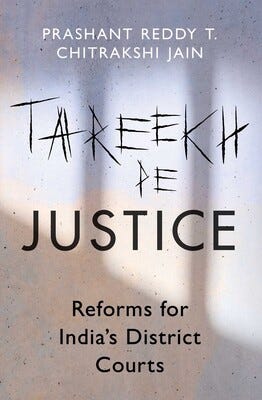
In their excellent new book, Prashant Reddy and Chitrakshi Jain document their prognosis of the problems plaguing the district judiciary and recommend solutions. In this post, we shall critically review the propositions therein. Their most emphatic and pragmatic solution is transparency. If you are even remotely interested in the Indian State, the Indian Economy or Society, this book is addressed to you. Before this book was launched, a subcommittee of the National Committee on Court Management System was studying Human Resources Development in the district judiciary. We lack credible data to demonstrate the lacunae in the working of the district judiciary. The National Judicial Data Grid produces some data, however, I learned from this book that this data is of dubious credibility. What should be case-level entries are, in fact, case-stage-level entries. My posts and other reports have provided this data before; which is probably an overcount. At the outset, I acknowledge that the ideas in this blog are a distillation of the book and the report, with some comments.
I- ACR Raj and Conduct Rules
Of the many things that stand out to me, District Judges are generally governed by All India Service (Conduct) Rules or State Government Conduct Rules designed for career bureaucrats in the administrative services of the executive branch. The judicial function requires much more than these rules provide for. District Judges are often governed entirely by the respective high courts without any balancing check by the legislature or the executive. For many states, the appointment is entirely conducted by the High Courts too. High Court judges write the infamous “Annual Confidential Report (ACR)” for the District Court Judges. The work profile of judges does not lend itself to a point-based assessment on a bunch of factors. However, this is how ACRs are designed and deployed. As the authors of the book point out, ACRs also play a prominent role in the promotion of judges, forced retirement and career assessment throughout. Often, an interview of the concerned judge is not deemed necessary to enter an adverse entry in ACR or give them feedback. The NCMS subcommittee on ACRs recommends adding this (See Chapter IV here).
A point which the book misses, but the NCMS report picks up, is that picking the judgments based on which the judge is assessed has no uniform guidelines. Which judgments and how many are to be evaluated vary vastly by the state. Monitoring and mentoring in the judiciary, unlike the executive, are much different, infrequent and sparse. The direct engagement of the High Court judge with the district court judges under his administrative control is sparse. It is unclear if it is sufficient for him to write an ACR of the judge. The NCMS report notes this, too. Many states do not provide the judge a copy of their own ACR after evaluation. The NCMS recommends all states provide the copies. The NCMS report, interestingly, also introduces points for Academic work, which is a welcome addition. Here are the notified rules and format made by the government for the judicial service in Karnataka.
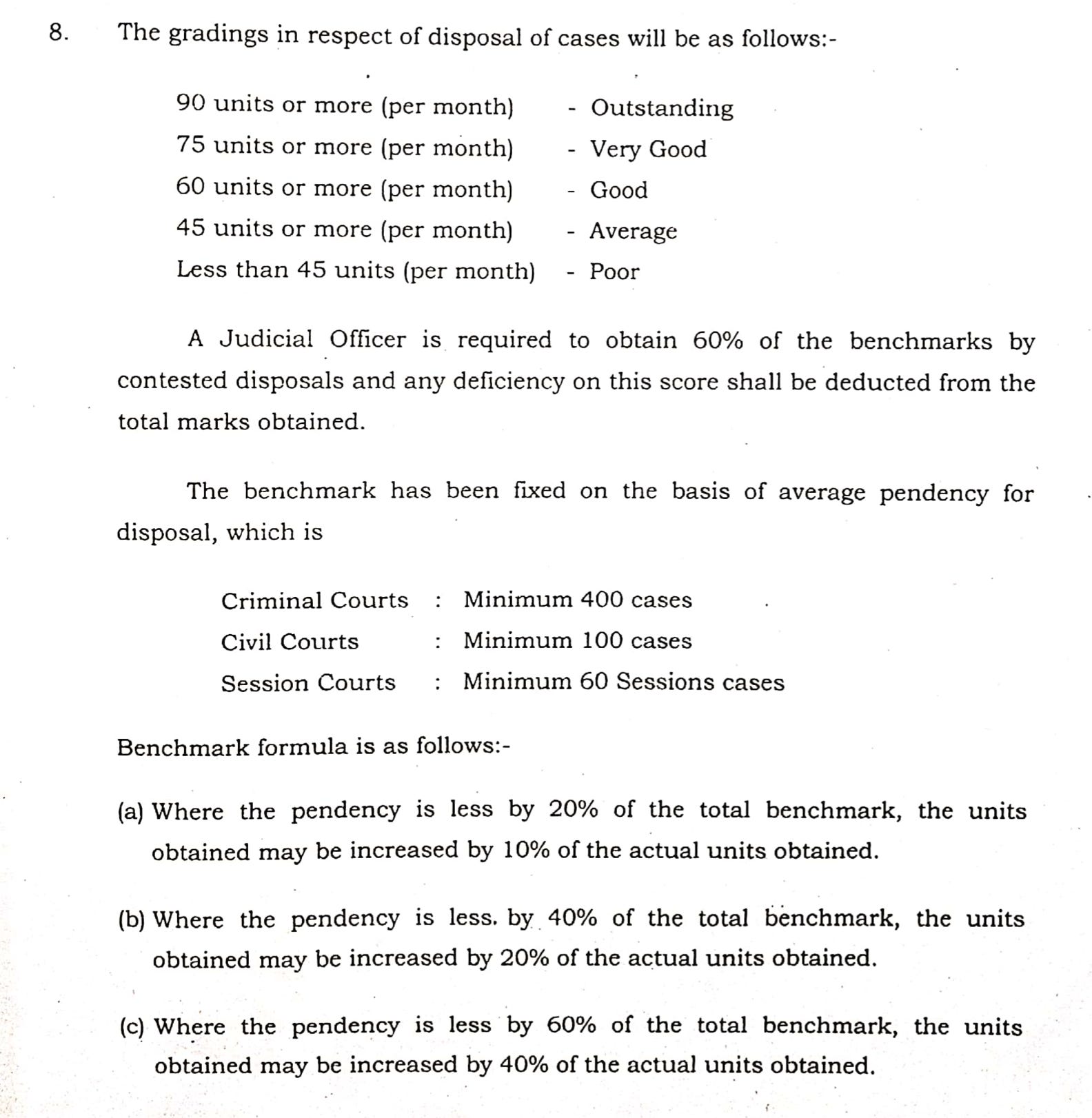
The ACR performance also depends on service units. Every judicial task is assigned a specific number of units. Judge’s overall service rating then depends on how many units he achieved. Here is the sample ACR from the Gauhati High Court with full details on how the unit scoring system works. Find snippets attached:

Goodharts Law?

Source: Jono Hey
When high-powered incentives are in place, tokenist rather than substantive compliance may take over. The authors of the book correctly note that the cases that give similar points with minimum effort are more likely to be taken up first. The ACR rules must be committed to heart by every practising lawyer. These are also great materials for an economic theorist trying to study incentives. It would be excellent to train a weighted model on these scores and then track these in case-disposal outcomes. These points have not been designed based on any data on case progress, but on a hunch and experience, because such data on time for disposal was not available when the rules were made by the Courts. It is guided by general experience on how much time a particular part of a trial in a particular type of case is likely to take. As the authors find out, there are also separate incentive points to pick cases older than five years. But the complexity of those cases is often a prohibitive bar which is unlikely to be overcome even with incentive points.
We must also understand the data collection problem for designing an exhaustive incentive scheme, which the authors of this book mention. These have been further studied in detail by Daksh.
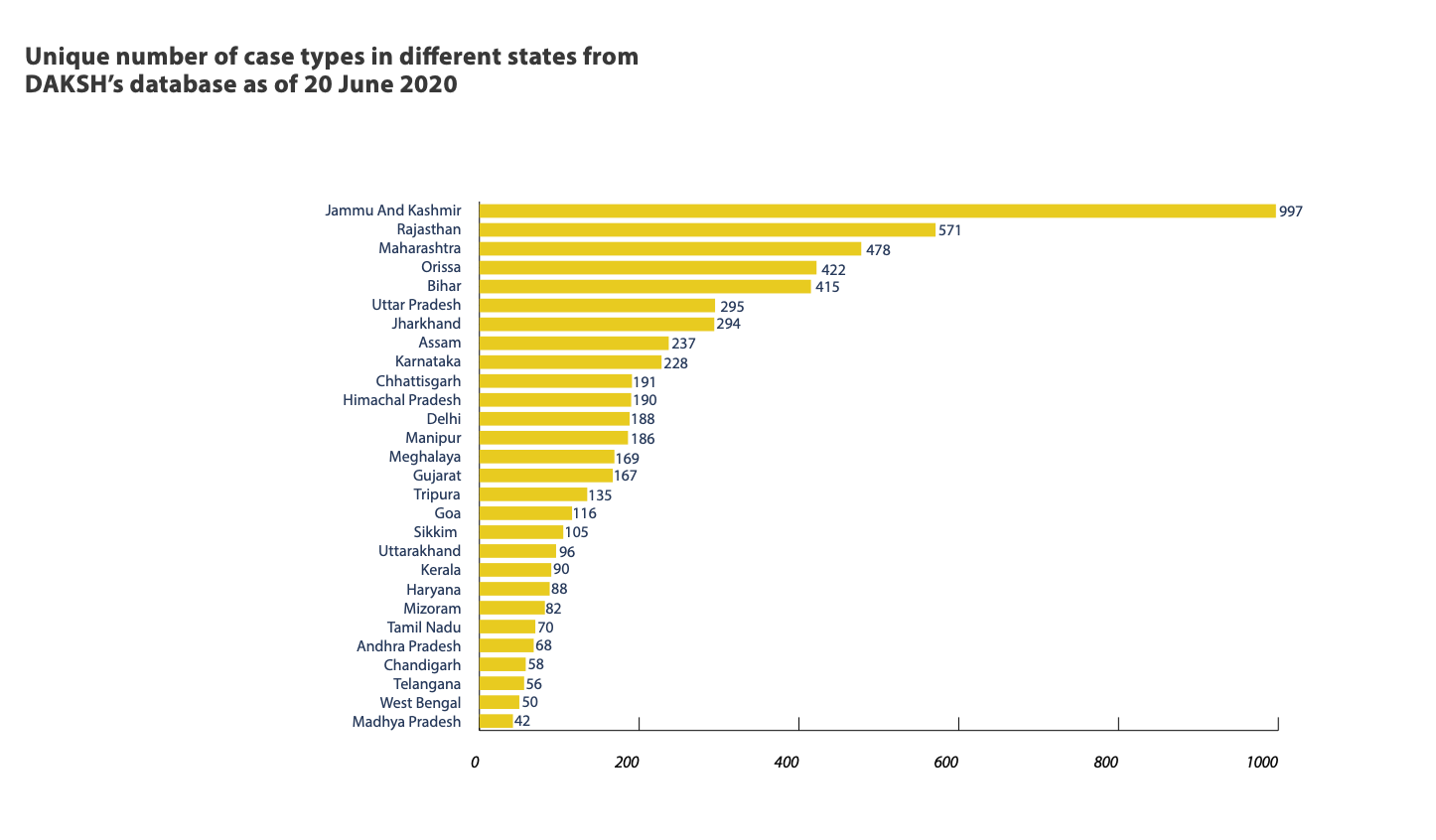
I-A. Problem with Case Typologies
a. Unique case types vary across the states. Much of this is a plain classification problem. But, there is also the issue of diverse caseloads.
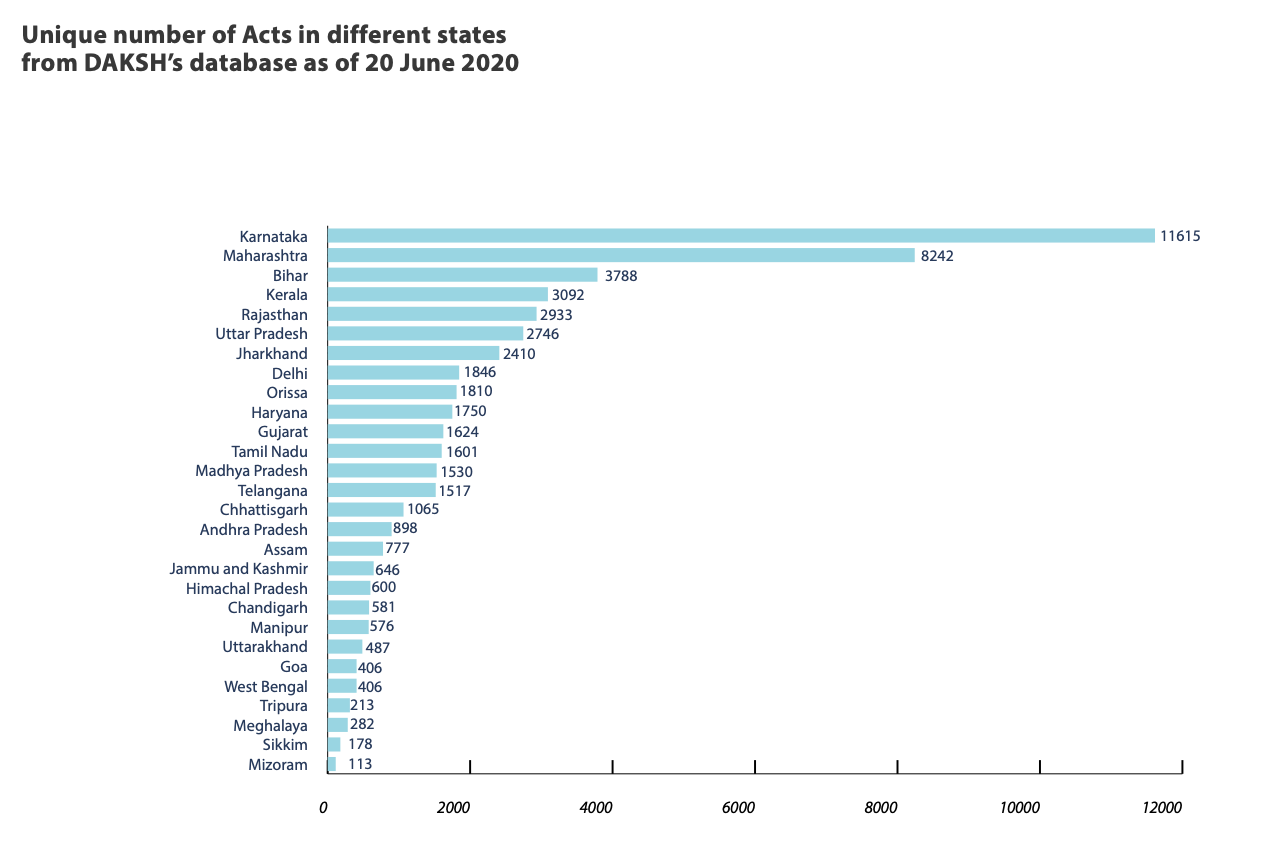
b. The range of different statutory enactments on which cases are tried changes all across the state. In some Courts necessarily some cases are found more predominantly in others.
c. Different unique stages of trial of cases in the Lower Judiciary
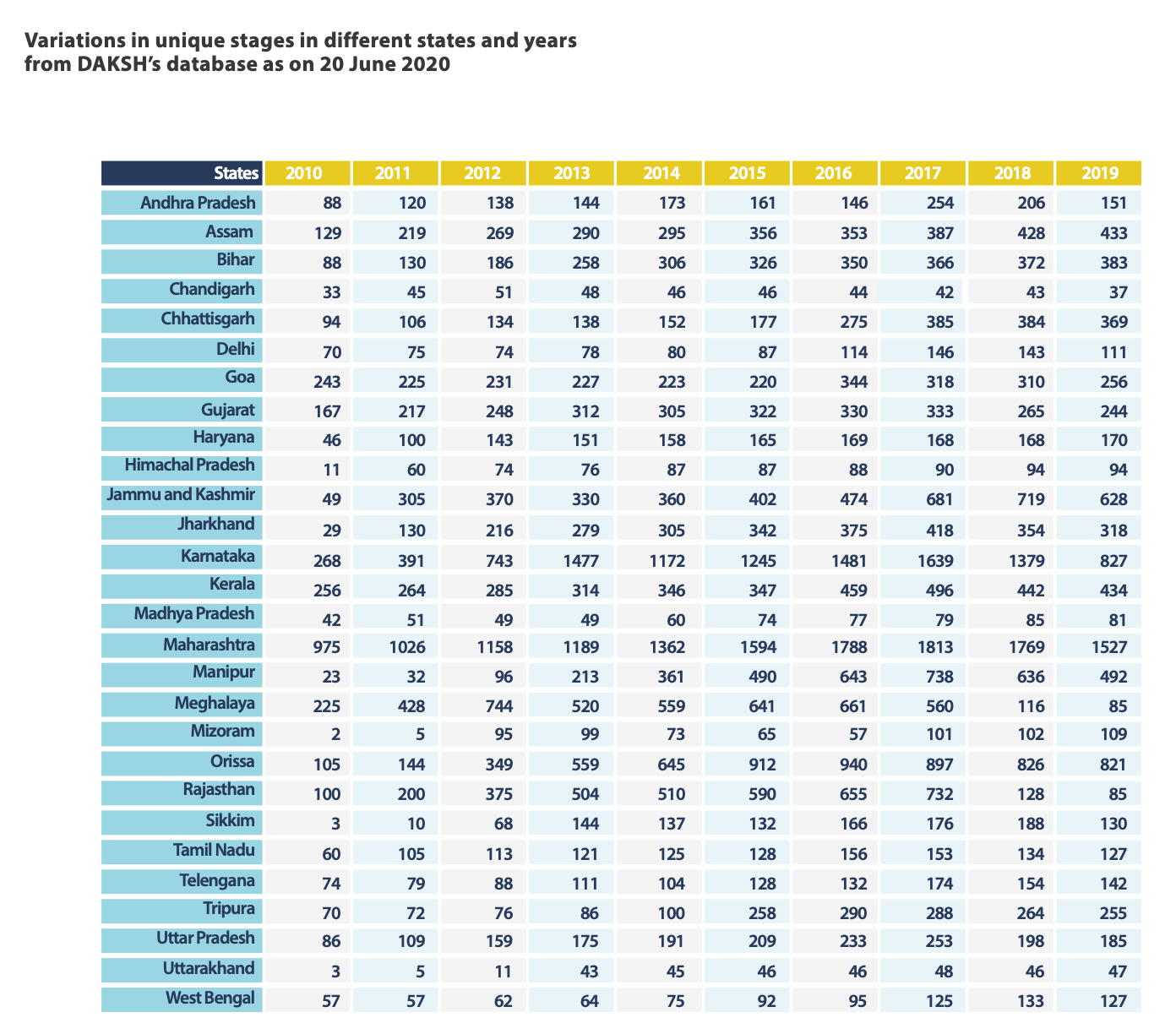
Source: DAKSH Deciphering Judicial Data.
We do not have a clear typology of cases. Nor is there clarity on the different stages a case-trial goes through. It varies by the court, case-load in that court, the history of the court and the High Court where the court is located. It is absurd that judicial officers’ performance evaluation, among other things, depends on how the court officers and advocates feel about them. Furthermore, this general scoring sometimes matters more than the quality of their judgments. Integrity depends entirely on Registrar-Vigilance’s reports. The NCMS committee acknowledges that vigilance committees, wherever present are understaffed and short on resources. The book recommends a separate commission for reviewing complaints against judges. This is reviewed in the next section. Following are some sample marking schemes:
By the Gauhati High Court for the Assam Courts
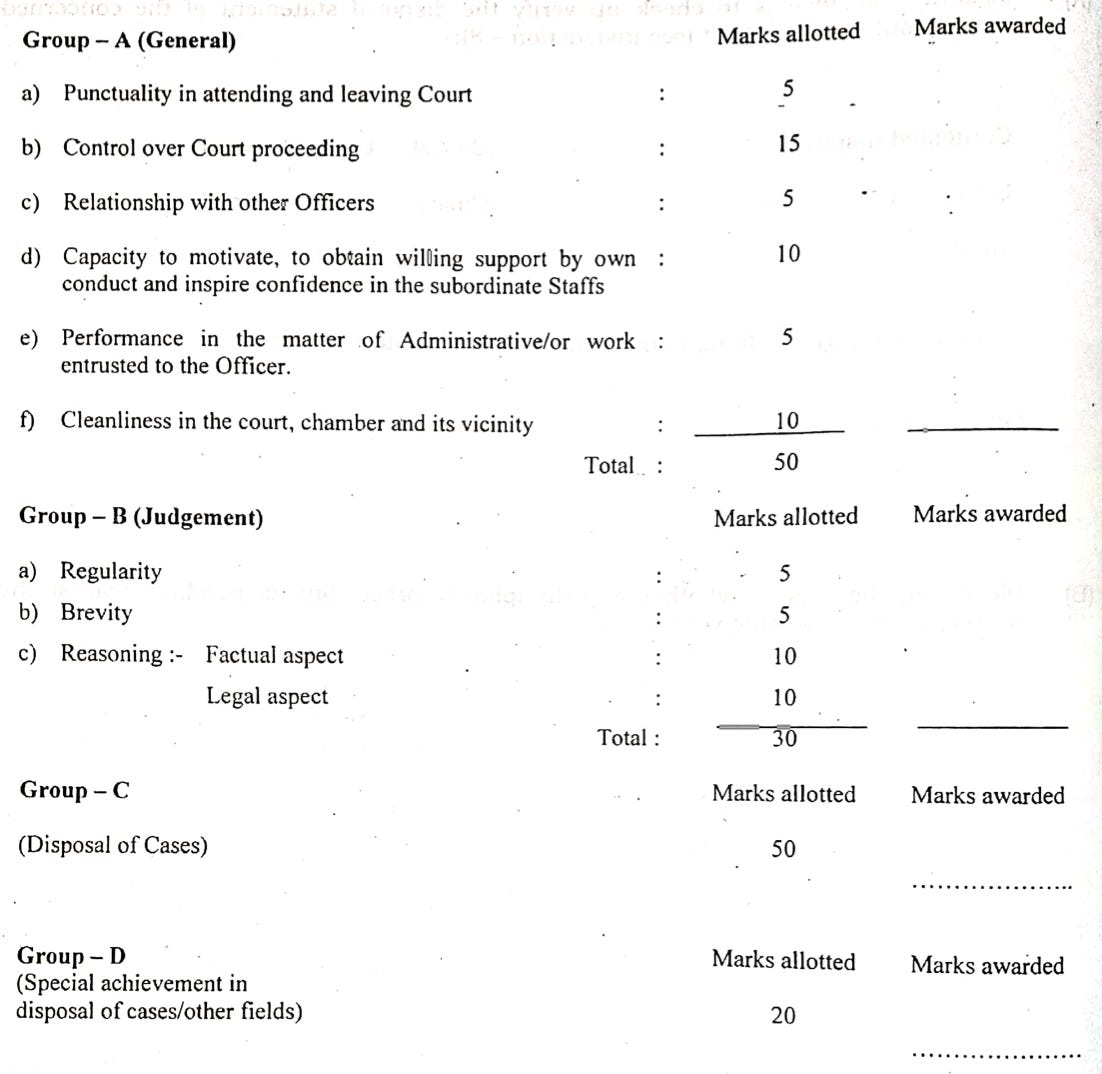
Rules by the Karnataka Government

Karnataka is among the first governments to frame rules directly for ACRs. This format is better because it allows for three levels of review of remarks against the judges, thus strengthening independence. Other governments have mostly left it to the High Courts, which the authors of the book bring to our attention. See this not-so-great 2018 report by the law ministry studying how judges are evaluated across the states. The issues are also studied by the NCMS Report on ACRs.
II- Judges are not Bureaucrats
Treating judges like bureaucrats might bring very difficult problems. Such administrative treatment is premised a misunderstanding of judicial function. Assessing judges in the absence of a better metaphor is akin to assessing academics for their research output. Prof. Baxi has some guidance on how one may judge the judges in the higher courts, which is worth reading in this regard. There have been many solutions in literature globally which are worth considering: These include randomly picking judgments for assessment, bias-reducing measures such as double-blind peer review of the quality of their judgments by peers and a senior committee, including impartiality in courtroom conduct as a marking parameter, studying user perceptions through interviews, decentering the office of registrar-vigilance into a vigilance committee, conducting courtroom observations through senior judges beyond the period of probation, making the paramters of evaluations transparent and public, setting up a bar committee to transparently review evaluations, interview with the junior judges for feedback and correction, remedial training, etc.
A survey of the judges to understand their pressures and design a comprehensive evaluation method would also be useful. Making judges independent of judicial colleagues and seniors is as important as making them independent of the executive and the legislature. [See the Bangalore Principles of Judicial Conduct.] This is also not apparent in the operation of the lower judiciary. A judgment being overturned on interpreting a point of law or its misapplication in an appeal becomes an adverse remark on the capability of the judge and is sufficient to cast doubt on both his competence and the impartiality of the judge. The book demonstrates some instances of this. A judgment by itself, no matter how bad in law, cannot by itself cast any doubt on the impartiality and integrity of the judge. This promotes risk-averse behaviour in the grant of bail.
The Supreme Court Manual on Prison Reforms (p. 182) takes note of this well-known fact in cryptic words and implicit terms:
It is important that the judicial officers pass orders concerning the liberty of individuals, free from any kind of influence or pressure. No external or internal hierarchical biases should affect the judicial discretion of judges in granting bail in befitting cases.
The Court also quotes from Sadhana Foundation v. State of UP :
Furthermore, one cannot overlook the reality of ours being a country wherein countless complainants are readily available without hesitation to tarnish the image of the judiciary, often for mere pennies or even cheap momentary popularity. Sometimes, a few disgruntled members of the Bar also join hands with them, and officers of the subordinate judiciary are usually the easiest target. It is, therefore, the duty of High Courts to extend their protective umbrella and ensure that upright and straightforward judicial officers are not subjected to unmerited onslaught.
III- Transfer Raj
Another thing plaguing the judiciary, like all bureaucracies across the world, is: TRANSFERS. Jurisdictions preferred by bureaucrats have generally had better state presence (See evidence in executive bureaucracy here). The issues related to frequent transfers are too well known to be detailed. However, in the judiciary specifically, the incentives to take up cases that take longer are much lower if transfers are frequent. Frequent transfers are also a source of anxiety for the judges, increasingly female, because they disturb family life. This is accentuated by the scoring-based ACR, as the authors of the book usefully point out.
Another distinct kind of transfer in the judiciary is the docket transfer, wherein the judge periodically rotates between presiding over civil and criminal proceedings. Authors argue that both jurisdictional and docket transfers are frequent and plague the district judiciary, and affect the disposal of complex cases substantially. Judges in the higher courts also have specific areas of competence and often sit on those benches. It is unreasonable to impose docket transfers in the lower judiciary without a better justification for this practice.
The authors contend that there is no evidence that experience is gained from transfers. However, when advocating policy change, the burden naturally is to show that the status quo is unmeritorious. Creating such evidence is crucial. Transfers are also an effective and preferred form of disciplinary action, to the dismay of the courts, where such judges, against whom disciplinary action is preferred, get transferred. Another question which economists may help answer is what is the optimal length of judicial tenure in a place? What factors enter such determination? Should there be rule-based randomised transfers in the judiciary, or is there merit in preserving discretion?
ACRs, Transfers and forced retirements closer to the end of tenure, combined with no immunity against allegations and complaints, make judges’ jobs harder. Writing a judgment that is bad in law cannot be a valid excuse to initiate disciplinary proceedings against a judge unless there is proven misbehaviour or incapacity. Even patent errors cannot by themselves not grounds for disciplinary action. The standards for proceeding against judges on competence have to be very high. Frivulous complaints constantly make judges anxious. The judges may be remanded to re-training on particular aspects of law and required to pass exams, but dismissal post-appointment and a full probation for incompetence is unwarranted. The authors emphasise these aspects while examining relevant court decisions. The judiciary must not conduct disciplinary actions on informally acquired information, like a church or even like an executive bureaucracy. Whenever extraneous considerations are alleged and substantial charges framed against a judge, the charges and details of the trial must be made public. The act of disciplining the judges is too important to be conducted in a clandestine, close coterie by justifying it through an ecclesiastical reference to retaining faith in the judiciary. It is crucial to release judicial independence from the sole disciplinary control of the High Courts. The Apex Court is generally deferential to the High Courts. The basic vitals of judicial inquiry processes cannot be shrouded in mystery.
IV- Some thoughts on the solutions proposed by the authors of the book
Transparency
The authors suggest forming a full-time Commission separate from the High Courts to screen complaints and conduct investigations against judges of the district judiciary. They also recommend a law laying down well-defined and transparent procedures. This has an important federal challenge to consider; a parliamentary law would wrest the control of the lower judiciary from the States. Given the unreasonable centralising drift already extant in the constitutional design (See Bhatia 2025 detailing this), such centralising change is best avoided. The constitutional amendment would centralise the judiciary further.
State-level commissions would certainly have a serious capacity and political control problem difficult to reckon with. The state governments, however, can and should make rules that emphasise transparency and decentralised committee-made decisions within the judiciary. Civil society can take up the burden of judicial accountability with more transparency on the decisions, thus made. Extending the RTI directly in the light of CPIO v Subhash Desai, by intentional and communicative legislation to the administrative side of the judiciary, might be a useful solution to consider. There are genuine transparency interests to be protected in both the higher and lower judiciary to balance independence. This is especially true of matters about disciplinary actions against judges. However, the clandestine manner of inquiries into complaints does more harm than good. The authors of the book also note, as a matter of regret, that most RTI applications sent by the authors of this book to the High Court Registry on the issue of disciplinary action were returned unanswered.
Caution on Executive Control Missed
While the authors are optimistic about the executive making rules for the local judiciary, its perils are scantily explored. Our experience with tribunals right from P. Sambamurthy and L Chandra Kumar till now must teach us a thing or two about executive-controlled appointments and transfers in the judiciary, especially the lower judiciary. In P Sambamurthy, the State Governments had taken upon themselves the power to unilaterally modify the orders of the administrative tribunals! If we trust the legislature to make the rules, we are one step away from losing control over what kind of rules get made. Absence of a strong civil society and clear consensus in the bar about this will make matters worse.
Limited evidence to entrench permanent posting and dockets
Permanent Posting of a Judge in a District and permanent docketing is another solution raised. Gain in experience, especially in the early years of service, gained through transfers, is often large, contrary to the author’s claim. This can be testified by their admissions in chapter 5 about how the new joinees are inexperienced in the manner and etiquette of the court. The authors of the book offer no evidence why the experience is not gained. They suggest that there is no evidence that it brings benefits, but to change policy, one ought to supply evidence.
Tradeoffs on incorporating practice requirements for the judiciary have not been explored fully
I could not get myself to agree with the proposals listed in Chapter 5. The average age of person joining the judiciary in India is under 30 years and has virtually no experience of the law and its practice.The authors make a formidable case for hiring lawyers with experience based on an application describing their experience, much beyond the minimal two- to three-year experience requirements, rather than by way of an examination.
Source: EPW 2020- Breaking through the bad boys club
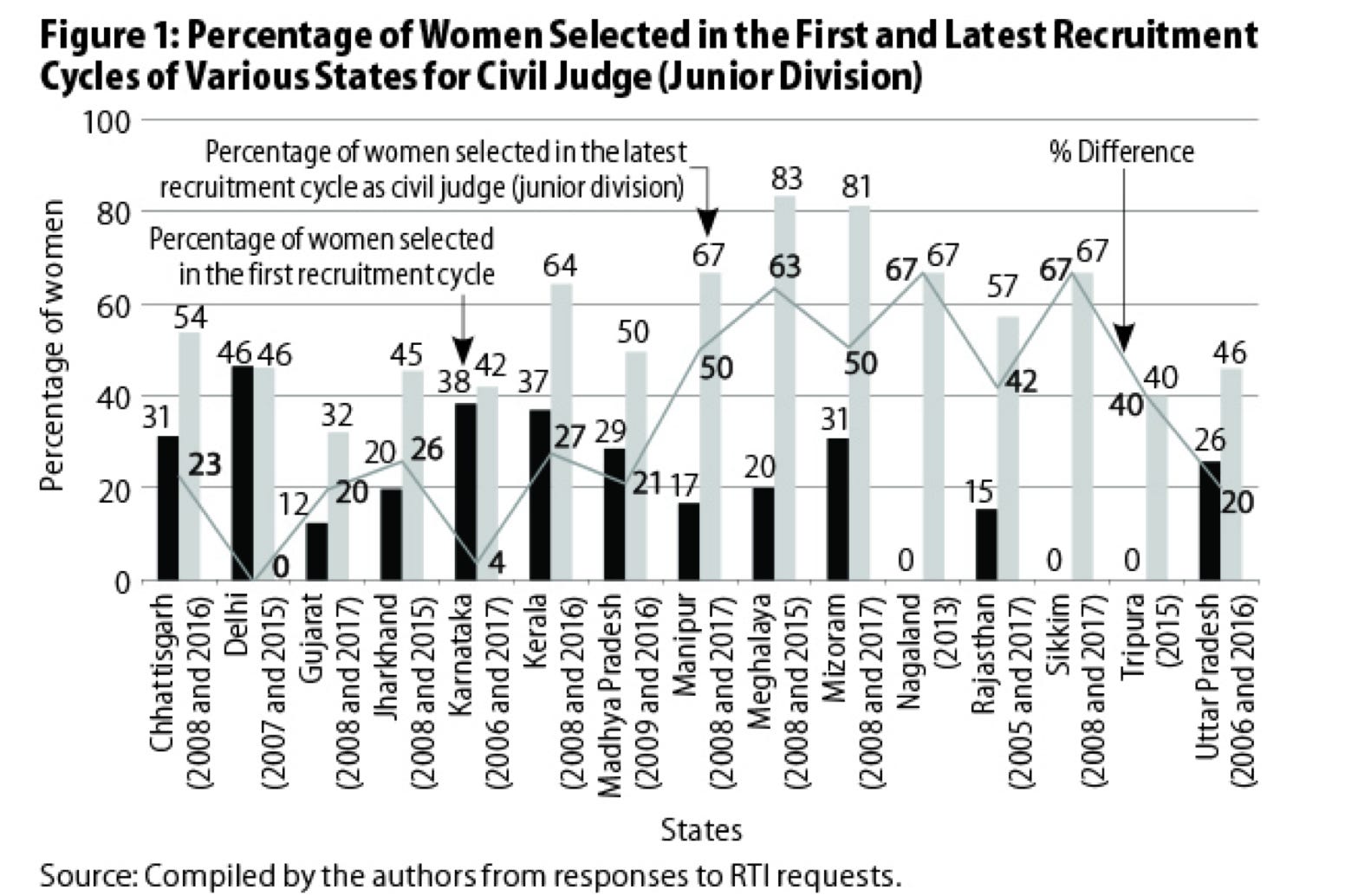
The authors trace the history of the proposition on the practice requirement and how it came to be unreasonably abolished. This issue is currently sub-judice in the Supreme Court. While the practice requirement is essential, the legal profession in India is feudal in its organisation. Authors, for instance, do not explain why old seasoned advocates would want to join an entry-level lower district judiciary job. The existing image and structure do not necessarily make it lucrative. Paying juniors is also a rare practice at the bar, and the average pay is miserable. Most pay structures of entry-level advocates throw the Minimum Wage enactments to the wind. Unlike other professions, such as ICAI, ICSI, where apprentices are paid reasonably, junior advocates have to take learning (sic) as their compensation. Therefore, experience requirements for the judiciary are burdensome on entrants from marginalised communities. The proportion of women judges in the sub-district judiciary has improved to 38% (!), which is higher than any other field in India and is a welcome achievement. Introducing exorbitant practice requirements makes entry into the lower judiciary impossible. The authors’ solutions to this collateral damage are vague and unlikely to be successful.
The SC subcommittee noted that 16 out of 20 high courts are in favour of some form of practice requirement of up to three years. To accommodate the drop in women applicants, they propose vertical reservations for women and age relaxation of up to two years during recruitments. One may see the recommendations by the High Courts in Annexure 2 here. Getting a judicial job before and after marriage means very different things for practising women. This is one field that needs intervention and careful discussion by the legislature. One interesting suggestion from Madhya Pradesh, for instance, is to waive practice requirements for outstanding graduates clearing all exams in the first attempt and scoring 70% aggregate marks in their university exam. One might even agree on a two-year practice requirement as in the report, but the book authors suggest excluding written exams and instead recruiting through essays explaining a career as a lawyer, along with an interview. Though a powerful idea, it needs careful unpacking from the point of view of its general equilibrium effects on people joining the law, entering the profession and surviving it. One useful suggestion from the authors is to lift the upper age limit on writing the judiciary exam. This will have to be coupled with the mandatory experience requirement. Experienced lawyers must be welcome to write the exam if they so wish.
The Role of the bar is crucial
The authors advocate continuing reservations in judicial appointments based on experience, and that the government should hire women and fresher graduates from marginalised communities for them to get experience. This, with due respect, is absurd. There is no mention or hope that the Bar will fix their payment and hiring structures to make law a respectable early-career profession. There is no emphasis on how the examination for selection and training may be redesigned.
If a 23-year-old IAS officer can manage a budget of a few hundred crores as Zilla Parishad CEO, it is unclear why a young judge cannot be trained to judge better. The authors are apprehensive about “probationary judges” making decisions. While I empathise with this, the solution is to attach juniors to chambers of senior judges and require them to sit on the bench with senior judges in the first year as part of paid training. This is common in the All-India Services. Reasonably smart lawyers can be trained by senior district judges. The respect and honour the profession and the legal community bestow on district judges and young lawyers also need to change. While the bar might readily pass the buck to the executive and blame design problems, the bar is very much a part of this problem. The advocates asking for and the judge granting adjournments is another part of the problem, for the poor quality of judgments has not been expressly examined. The SC also recently questioned why the Bar should have a monopoly over setting the standards of training for lawyers.
‘Two chains of courts’ is a flimsy solution where too many state and central acts overlap; specific sections of central acts have state amendments
One other suggestion in the book is to create two different chains of courts, one for state laws and one for union laws. With this, however, coherence might dip, polyvocality might increase, and integration and harmony might reduce. It is arguable whether efficiency will increase because many matters have concurrent laws, which are enforced simultaneously in similar offences. This suggestion, in my opinion, is based on an error of judgment about how the web of laws operates. If at all, this needs a lot of experimentation before it even becomes a serious proposal.
New High Court Benches in growing towns is an issue much beyond critical mass and is a Tier-1 reform proposal
A serious issue the authors flag is of High Court Benches. Many state governments are genuinely interested in establishing new benches of the High Courts. Many courts need such a bench. Kerala, Odisha, Haryana, Jharkhand. Pune, for instance, urgently requires a High Court bench. So does Thiruvananthapuram, and a Parliament bill to that effect keeps coming once in a while. Proposal for a Bench in Balangir is pending too. This is a top-tier reform proposal that must be granted as soon as possible. It is learned that the CJ’s of high courts have often blocked these proposals. But that must not be done. Many new Indian cities urgently need High Court Benches. We ought to be building courts for the future.
Focus on Legal Training is essential in the long run
This issue certainly needs more careful design thinking, and the authors do a great job of sparking the conversation. They also do not focus on poor legal training in India as a systematic challenge to solve. 49% law graduates in India failed the Bar Council Open Book Law practice eligibility exam. How to do it is beyond the scope of this post. For training judges and state judicial academies, some suggestions are here on P. 32, a summary of the standing committee report, and an excellent report under Prof. Faizan Mustafa.
Other issues— Juries, procedural law, Indian Civil Society
Similarly, exploration of juries and procedural law in the book is scant. The literature on juries in India is generally scant (See Kalyani Ramnath, who researched juries on this). The authors suggest that there is caste bias in the judiciary, which may justify the use of juries. However, this is not empirically founded. Can the jury be a fraternal and competent institution? While the role of judicial discretion, especially in criminal trials and sentencing, is very high, a comprehensive case for juries was beyond the scope of this book. The evidence on jury effectiveness is mixed, but we should certainly consider experimenting with the trial jury or a grand jury system in some town courts.
The authors also state that ejecting procedural provisions is unlikely to hasten litigation. Consumer Protection Act, National Green Tribunals and PILs are the three examples the authors used to construct this narrative, but do not provide a contrast of what they have achieved. While procedural law is valuable, strictly theoretically speaking, doing away with it might certainly expand access and reduce time. We need more empirical work on the localisation of justice and easing procedural norms. It is important to ask, for instance, what the Nyaya Panchayats have achieved or evaluate the Commercial Courts Act. The book has no answer on why such acts are enacted, and may be ignoring their impact on the local state in India.
Concluding remarks
The book does not explore the facet that the Indian civil society is fragile and fractured, and organised as interest groups. Much of judicial holing up and non-transparency is governed by this urge to be the sole guardians of public reason and propriety. Control by the higher judiciary is a lesser evil than the parliament in perceptions of the higher judiciary, and the fear is not without history or unwarranted. All this being said, complete independence of the district judiciary in passing orders is a worthy and necessary pursuit. More optimal tenure sizes and allowing the judges to specialise five years into their career without docket rotation would also be excellent ideas. All authors' suggestions on reforming bureaucracy within the judiciary—ordinarily called ministerial officers— namely: a new professional agency, added transparency and renewing the data collection project to correct varied and accurate, are also excellent. Surveying the judicial officers in lower- and district judiciary is also critical.
There has been more movement on reforming the district judiciary in the last five years than in the seventy years before that combined. This momentum must continue.