
Aayaram, Gayaram and the Endless Wait for Balaram
A Brief Biography of the Speaker's role in the Indian Anti-Defection Law

The Supreme Court this time recommended that an independent judicial tribunal be appointed to adjudicate cases concerning the Anti-Defection Law. And perhaps for the first time, the court makes sense. If you are aware of these debates, you may only read Part III — the assembly debates on defection. The purpose of this post is to share some of those with some context.
In what follows, I will traverse the discussions that ensued in the enactment of the Tenth Schedule and three Supreme Court pronouncements thereafter.
Part I - Disabling the Adjudicator
Part II- Why did this come about?
Part III- Parliament becomes the stage
IIIA - Tabling the bill
III-B - Aayaram, Gayaram and Balaram
III-C - Anxieties from the Cow and the Calf
Part IV— What did the Courts decide?
Part V- Summary
Part VI- Restraining executive control
Part I — Disabling the Adjudicator
Under existing Indian law, the speaker continues to hold office as long as they enjoy the support of the majority of legislators in the house. But often, defections relate to changes in majorities and the toppling of governments. In one gameplay, a defecting member can defuse the Tenth schedule and anti-defection law before defecting by issuing a removal notice to the speaker. A notice that he has lost the support of the majority in the house and therefore must face a vote test. A vote-test in which they will vote against the existing speaker and install a new speaker in his place.
In Nabam Rebia, the court held that once a notice for the speaker’s removal is served, he is de jure—by law— disabled from exercising his authority as the speaker. Thereafter, he cannot discharge his functions as the adjudicator on defection disputes under the Tenth Schedule. Our legislators learned this quickly. They could now dispatch benign removal notices to the speaker before defecting and joining the majority. After that had been accomplished, it was only a matter of time until the alleged defectors elected a new rubber-stamp speaker who would support their cause and be their crusader. At least, that is the Alfred Hitchcock thriller we had the luxury of witnessing in Maharashtra. Political Propriety and Constitutional Morality became a carcass that was dragged around by the stamping-signing authorities. Ironically, the Supreme Court judgment setting out the law, both the defectors, now in power, and the complainants, now vindicated, celebrated it as a moral victory.
Generally and specifically, that is, each time: It is absurd for a person democratically elected by a plurality of votes in a group to hold an office that adjudicates disputes about members of that group. There are five good reasons for this:
First—inherent bias— the elected person always favours a sub-group within the group, often the one that nurtures him. Worse if he continues to belong to that sub-group while also adjudicating. Second, of forced inaction—one sub-group can pose a challenge to his legitimacy and continuance in office while he adjudicates. Third, of a Smithian variety, the problem of non-specialisation— the elected person is more likely to specialise in “luck” and “loyalty” than in constitutional adjudication. Fourth, of perception—people outside the group, but interested in the group, are watching him and can influence his sensibilities. This, however, can easily be overcome by adopting shamelessness and defying any embarrassment. However, the problem is worse if the person elected has to go back to the group that elected him for rent, survival and career. This is connected to the fifth problem— of ambition— “the prize/reprimand for writing the best essay/fair judgment” trumps any remote human instinct for fairness in judgment. Judicial positions are therefore and always appointed, and appointed independently as far as possible. In the Indian democracy, all usual and logical rules are treated as exceptions as far as possible.
What I described above is exactly the design of the Tenth Schedule. The twice-elected speaker— elected first by his electorate and then by the members of the house— who is himself a member of a party, is a tribunal under the Tenth Schedule. He is supposed to decide sub-group membership and betrayal of loyalties— i.e. membership of the party and defection. This is very different from his ordinary speaker duties, which involve ensuring procedures and order in the house. This is the power to expel members from the house for voting against the party's instructions or for activities against their party within the house or outside the house. The speaker is not the adjudicator of member discipline for the proper functioning of the house; he is the adjudicator of party loyalty. The contradictions become starker when the group is smaller, as costs and benefits of decisions concentrate in even smaller sub-groups. In Meghalaya, five MLAs can topple a government on most sunny-rainy days. Bestowing judicial functions on officers elected by a majority vote is a comic farce based on a fundamental misunderstanding of the adjudicatory function.
This post is to have you join me in demonstrating how courts and parliaments “grappled with this(!!)”. Without resolving this tension about the role of the speaker, the tenth schedule hangs in a limbo. We are certainly looking for other convenient explanations for this design that might sound like convincing justifications. Please drop those in the comments.
Until then, let’s begin with some history.
Part II- Why did this come about?
When the Tenth Schedule was enacted, Congress was in decline, and regional parties were on the rise. It was a time of great churn in the Indian Polity. One CPI MP, Shri Bhupesh Gupta, opined to this effect in his dissenting note as a member of the YB Chavan Committee(which we turn to shortly). He believed that because defections had stopped being one-way traffic in favour of the Congress, and the Congress was disintegrating, defections had suddenly become an alarming problem. Shri Subhash Kashyap, in his book on defections, notes:
“Between the fourth and the fifth general elections in 1967 and 1972, from among the 4,000-odd members of the Lok Sabha and the Legislative Assemblies in the States and the Union Territories, there were nearly 2,000 cases of defection and counter-defection. By the end of March 1971, approximately 50 per cent of the legislators had changed their party affiliations, and several of them did so more than once—some of them as many as five times. One MLA was found to have defected five times to be a Minister for only five days.
For some time, on average, more than one legislator was defecting each day, and almost one State Government was falling each month due to these changes in party affiliations by members. In the case of State Assemblies alone, as much as 50.5 per cent of the total number of legislators changed their political affiliations at least once. The percentage would be even more alarming if such States were left out where Governments happened to be more stable, and changes of political affiliations or defections from parties remained very infrequent.
That the lure of office played a dominant part in this “political horsetrading” was obvious from the fact that out of 20 defecting legislators of the various States during the first year of “defection politics”, 16 were included in the Councils of Ministers in the Governments which they helped to form.”
If half the legislators were changing parties, it would be difficult to explain that phenomenon as a deviation from a democratic norm. More than 15 defectors had also become chief ministers. However, that discussion must not hold us for now. Let’s proceed. The YB Chavan all-party Committee in 1968 recommended that a law be enacted to curb what by this point appeared to be a menace, “a national malady”. The Law Members of the committee preferred that defection be brought within the remit of the existing Art. 105. This would enable the president or governor to decide these matters in consultation with the ECI. They did not deem a constitutional amendment to be necessary at all; a simple law would have sufficed. But there was a constitutional question about the legislators’ right to conscience, and the amendment was perhaps necessary. Many members tabled private member bills concerning defection, too. The Tarkunde Committee set up by JP Narayan in 1974 in defiance of the Congress, surprisingly, never made recommendations about defection. It was in this context that the parliamentary debates that ensued were illuminating. Conjecturally, this was because what was born out of the JP Movement was a political Hotchpotch called the Janata Party. Janata Party kept splitting all of the 1980s into innumerable daughter-concerns and sister-concerns.
With that background, let’s turn to the parliamentary debates.
Part III- Parliamentary becomes the stage
IIIA- Tabling the bill
Parliament back then used to be a house where meaningful discussions still ensued. It once met on November 17th, 1983, to host a dedicated discussion on the issue of defection. That animated discussion then flourished into a rich discussion on electoral reforms.
Finally, a bill was drafted by the Rajiv Gandhi Government led by his law minister, Barrister Adv. Ashoke Kumar Sen. Dramatically, and what with experience also became an irony, the bill was tabled for discussion on the death anniversary of Mahatma Gandhi, on the 30th of January 1985.
AK Sen introduced the bill. I will focus on the role given to the speaker. His reasons for giving the powers to the speaker were peculiar. Not separation of powers, not supremacy of the house or anything else; he said:
“Once it goes outside the control of the House, it will take years and years for the court to come to a decision, because there will be appeals and further appeals, and the matter will be forgotten, like the Anti-Defection Bills of the past. Therefore, if we mean business, we must give authority to decide this serious matter to the Speaker or the Chairman of the House concerned, who has been elected by the majority vote of the House concerned.”
The house hardly agreed.
Bhattam Shrimurthy, a lawyer politician from Vishakhapattanam, preferred that all parties together build some conventions by consensus, in addition to the legislation solely. A private solution of the parties by the parties for the parties, if one may. He further hastened to add:
“ it is not in the best interest and traditions of this House that the Speaker should be given extraordinary and super powers so as to disqualify a Member on certain grounds. So, the powers of disqualification are not to be exercisable by the Speaker. It will be done not by the Speaker but by the Chief Election Commissioner.”
He reminded the house that Indian houses needed a convention wherein the speaker resigned from his primary membership of the political party after he was elected the speaker. He added:
“The Speaker is the guardian of the powers and privileges of the members of the House and, that being the case, let him not be reduced to a position of merely carrying out the executive function in regard to this matter vis-a-vis the members of the House. That is why I want the Speaker to be saved from this embarrassment.”
Bhagwat Jha Azad, the Indira camp Congressi from Bhagalpur, who later became the Chief Minister of Bihar, also sounded a note of caution. “I hope the rules that will be framed under clause giving Powers to the Speaker and Chairmen, will be exercised properly”.
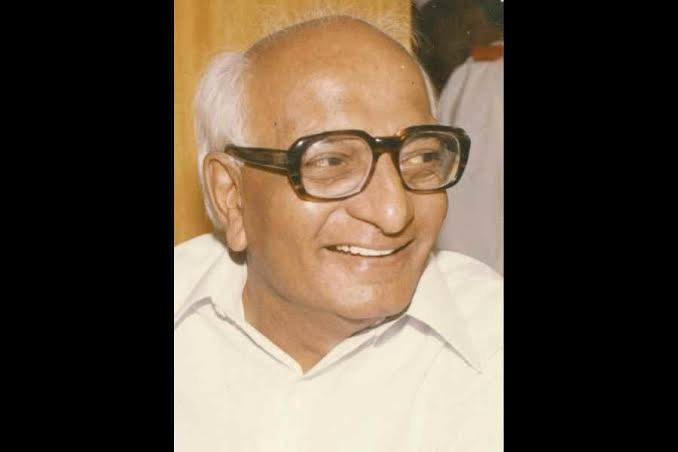
Madhu Dandavate, MP from Rajapur
Then rose the Samajvadi doyen, MP from Rajapur, Madhu Dandavate. He had already tabled two drafts of the defection bill in the parliament before this and was among those keen to enact a law on defection. That, according to him, was the vision laid by Jayprakashji for the Janata Party. After making a snide reference to leaders who are “so non-vegetarian that they have to swallow one leader every week”, he suggested:
“Then, Sir, I would like that Speaker should not be involved in controversies at all. Already some changes are likely to be made. For instance, if you refer to clause 6(2), it says whatever the Speaker does in connection with the actions to be taken, that will be deemed as the proceedings of the House.
If they are deemed to be the proceedings of the House in which the Members of the House will not be able to say anything on the Floor, in that case we are unnecessarily involving the Speaker in a lot of controversies, and Speaker should be kept above that.
Therefore, some Members have put forward an amendment that instead of the Speaker being in that position, some sort of a committee of the House can be formed or a joint committee can be formed which will go into the problem..”
Abdul Rashid Kabuli, the NC MP from Srinagar, referred to the Jammu Kashmir Defection Act enacted by the Sheikh Abdullah government in 1979 in Kashmir. It was the first Indian state to have made such a law. He, too, took exception to the powers given to the speaker. While condemning the recent defection by Congress members [which probably is the only case on defection decided in the first instance by the High Court], he said:
“At that time all the powers were not delegated to the Speaker and he was authorised to refer a case to judiciary, if he deemed it fit and the judiciary could decide the case. I think that shortcoming has now been removed in this Bill. I would also like to make a submission that when we go through this legislation and analyse it, there is a lurking fear that the Speaker may have been given authoritarian powers.
The Speaker or the Chairman is elected through due process and he belongs to a party. He is elected on the ticket of a particular party and when he seeks re-election, he has to look to that party again. A legislation should be brought in the Parliament that in future nobody would contest against the Speaker and once his non-political character has been recognised, he will have to sever all connections with his political party so that nobody may contest election against him. Then he will contest election as an independent candidate and return as an independent candidate to this House. Otherwise, if such privileges are not given to the Speaker and he is under pressure from the ruling party, it is feared that the rights of the Opposition may be adversely affected.”
Through all this discussion, the speaker termed the bill “a vaccination to an epidemic”. Adv. Tenali Venkatraman however, probingly asked, why was this not made a part of Art. 103 or some section in the Representation of the People Act? Why was the power to adjudicate granted to the speaker or the chairman? As the debate gathered steam, Jaipal Singh rose to speak.
III-B — Aayaram, Gayaram and Balaram
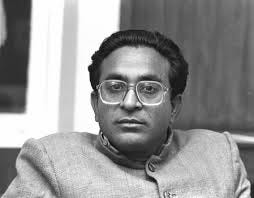
Source: Times
Sudini Jaipal Singh, then a first-time Janata Dal MP from Mahbubnagar, who later rose to prominence in Congress, contended that these clauses, particularly clause 6(2) making speaker decisions proceedings of the house, were violative of the basic structure of the constitution. He too wanted no role for the speaker. When prodded, the then speaker himself suggested that he was “not enamoured by the role(under the Tenth Schedule) at all.”
Jaipal Singh then identified the malady that continues with us till today, 40 years later, in precise terms:
“To leave such a grave matter to the individual's discreation(sic) of the Speaker is dangerous. Apart from tbe personality of the Speaker, what is the position of the Speaker? Speaker is always at the command of the majority party in the House.”
What transpired next is worth reproducing in full:
Mr. Speaker: That is absolutely wrong.
Jaipal Reddy: How is it wrong? I will explain my point, I did not mean to cast any aspersions,
Mr. Speaker: Before making a Speaker, it might be in the hands of the ruling group because they are in the majority.
Jaipal Reddy: But he can be thrown out.
Mr. Speaker: Yes, he can be thrown out. But as long as one sits on the Chair, he is supposed to uphold the good traditions.
Jaipal Reddy: When the Speaker's position is undependable, how can we leave such a delicate matter to the office of the Speaker? The majority of the House is commanded by the ruling party. The majority in the ruling party is always commanded in terms of the ruling clique of the ruling party, In the ultimate analysis the Speaker is at the command of the ruling clique of the ruling party.”
Notice these tensions. Whether the speaker may be trusted at all? Is the office of the speaker impartial? His term in office was undependable. He could be thrown out. This prescient warning, once ignored, would continue to vitiate the Tenth Schedule jurisprudence in time to come. The speaker continued:
Mr. Speaker: You are trying to cast aspersions on the Chair, Mr, Reddy.
Jaipal Reddy: No, ..
SHRI K.P. UNNIKRISHNAN(intervenes): He is talking of the Office of the Speaker.
Jaipal, being the genius he is, grabbed an analogy that had been used by a previous speaker. He said:
Jaipal Reddy: You are an exception to the rule, Sir. As an exception, you are the charm of the rule. । can say that we have only one Bal Ram. We do not have so many Bal Rams in all the State Legislatures. They are the Aya Rams and Gaya Rams, not Bal Ram. Therefore, you have to have that into consideration. My plea is…
The office of the speaker must not be confused with the person holding the office. The person can come and go. This is a confusion that would continue into much of court jurisprudence, had been agitated and raised long before the issue arose in the courts.
Jaipal Reddy had peered into an important flaw of the Tenth Schedule. He concluded:
“the Law Minister should agree to our proposal for tbe formation of a Judicial Committee on Disqualifications, which could against the Speaker in the matter.”
III-C — Anxieties from the Cow and the Calf
There were a few murmurs about the ouster of the courts to preserve the legitimacy of the house and its proceedings. However, the discomforted chorus about the speaker being the adjudicator was growing. Kishore Chandra Deo also joined the now-growing chorus that the Speaker’s sole jurisdiction must be ousted in favour of a judicial committee. So did K Ramchandra Reddy from Hindupur. He also sought a distinction between the speaker's and the deputy speaker’s roles in any case. He expressed a fear that clauses 6 and 7 might be reasons for the court to strike down this schedule.
Finally, Ashoke Sen, the affable law minister, stood to respond. It was a wishy-washy response, a response that left much wanting. Certainly, a response that was not that of a measured lawyer. He said:
“The other questions are about the Speaker’s authority. It was our clear intention from the very beginning that we are not going to allow this matter to be dilly-dallied and tossed about in the courts of law or in the Election Commission’s office. I had myself appeared in the courts along with late Kanhaiya Lal Mishra Ji for winning our symbol. Babuji (Jagjivan Ram) is also there. He was the President of our party then. We used to go very regularly and Shri Siddhartha Shankar Ray was assisting me at that time. But by the time we won back our symbol, it became worthless, because we had already won the election not on a pair of bullocks, but on a cow and a calf.
Therefore, that type of delay should not be tolerated any more. We want a quick decision. If this Bill is to be effective, and if defection is to be outlawed effectively, then we must choose a forum which will decide the matter fearlessly and expeditiously. This is the only forum that is possible. With these words, I commend the Motion for consideration.”
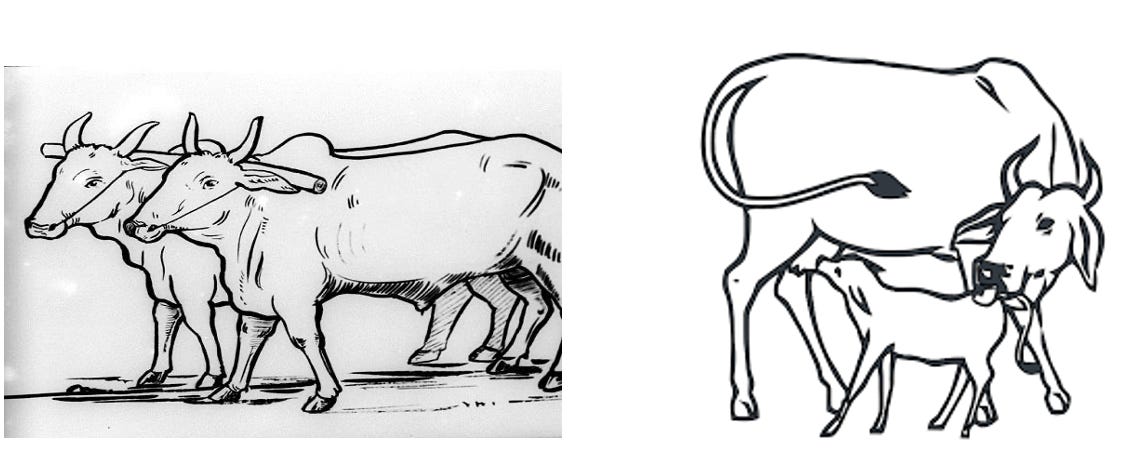
Once bitten, twice shy. The Congress(I), being given a Cow and Calf in the 1971 General Elections instead of a bullock and a yoke, a delayed decision and an anticipation of the slow judicial process, was an important factor that had cost us an independent Tenth Schedule adjudicator. The idea of tribunals had been very much popular then. However, we are world-class participants in the sport of repackaging the most convenient explanation as the most convincing justification. The bill was adopted unanimously and without changes. The cracks in this design began to show within a few years.
Part IV— What did the Courts decide?
When first asked to decide whether this decision within the house by the speaker is constitutional, in Kihoto Hollohan, a thin majority (3:2) agreed that while the courts will continue to decide appeals from this decision, the speaker shall, in the first instance, decide the defection disputes that arose within the house. The ouster of jurisdiction of the court in favour of the speaker was, in the opinion of the majority, severable. That is, the credibility of the entire tenth schedule did not hang on the ouster of the court’s jurisdiction in deciding defection cases, in the first instance. As long as the constitutional courts could hear appeals, all was well.
From a legal point of view, all actions of the speaker are subject to appeal and can be set right at a later date. From the political point of view, however, a week later is too late. Legitimacy of the government, perceptions, control over money, resources and state police, control of the party in the interim; too much is at stake to wait for the court to overturn anything in appeal. Everything that happens in the interim under any seal of the emblem or is deliberately omitted eventually turns permanent. It hardly matters to the lay voter who is wielding the seal and what they are stamping. For example, the farcical speaker decision in the Maharashtra defection was in the teeth of the Supreme Court’s specific instructions in Subhash Desai and remains pending in appeal one year after successfully completing their term.
Kihoto was far back in 1992. Mere six years into the new law, trying to change the Aayaram-Gayaram Culture. The Kihoto ruling, however, was made despite the experiences and writings about the impartiality of the speaker; despite the insights accessible to that era. The 1990-91, the Janata Dal-Split engineered by Chandra Shekhar was playing out in the Lok Sabha itself. Constitutional experts and some members of the assembly were in chorus that there must be a judicial determination of defection by a judge or a judicial committee in the first instance itself, rather than on appeal. See here for some details. For instance, in 1991:
“..the then Union Law Minister (Shri Subramaniam Swamy, of the Janata Dal (S)), in his (public) interview, threatened the Speaker to get him arrested if he (Speaker of the Lok Sabha) did not postpone indefinitely the last date for submission of the replies of 37 Janata Dal (Samajvadi) members, whose disqualification under the Anti-Defection Law had been sought by the Janata Dal”
Former Speaker Mr. Shivraj Patil himself, in his decision of June 1, 1993, duly noted:
“Since Speakers in India are, after all, party members, they should not be burdened with the job of pronouncing on the membership of their fellow members. Whatever they decide, motives would be imputed to them.”
Two dissenting judges in Kihoto foresaw the bias that the speaker’s decisions could create. They noted:
“The Speaker, being an authority within the House and his tenure being dependent on the will of the majority therein, likelihood of suspicion of bias could not be ruled out. The question as to disqualification of a member has adjudicatory disposition and, therefore, requires the decision to be rendered in consonance with the scheme for adjudication of disputes. Rule of law has in it firmly entrenched, natural justice, of which, rule against Bias is a necessary concomitant; and basic postulates of Rule against Bias are; Nemo judex in causa sua - `A Judge is disqualified from determining any case in which he may be, or may fairly be suspected to be, biased'; and `it is of fundamental importance that justice should not only be done, but should manifestly and undoubtedly be seen to be done.”
However, it was a dissent, an opinion for a kind perusal by history and the future, not law. The Tenth schedule continued.
The judges in the majority also did not recognise the modus operandus of giving notice of removal before defecting. This would only flourish later. The speaker lost de jure power once a removal notice was given to him. He could not adjudicate on the defection. This only came up later and was decided in 2016. In Nabam Rebia (See Issue III here), the court held:
“…it is necessary that the Speaker as a tribunal has to have complete detachment and perceivable impartiality. When there is an expression of intention to move the resolution to remove him, it is requisite that he should stand the test and then proceed.”
This, however, contradicted the holding in Kihoto Hollohan. The court there had held:
“It is inappropriate to express distrust in the high office of the speaker, merely because some of the speakers are alleged, or even found, to have discharged their functions not in keeping with the great traditions of that high office. The Robes of the Speaker do change and elevate the man inside.”
In both Rebia and Kihoto, the court desired an unbiased and credible speaker. If wishes were horses, beggars would certainly ride. The Kihoto bench was more gracious and trusting of the person occupying the office of the speaker. The Rebia bench was more cynical and insisted that proving a majority was essential for exercising functions as a speaker. The Rebia bench in the least implicitly accepted the proposition that the speaker’s fate hung on enjoying the confidence of the majority, even if that majority included alleged defectors. Unless the speaker had finally adjudicated, an allegation of defection is a mere allegation. The defector continues to be a full member. There was no ipso facto or per se defection, without adjudication. However, a mere suspicion of loss of confidence in the house in the speaker, even if caused by the act of defectors, disabled the speaker from exercising the functions of the office till he demonstrated numbers. Accordingly, he could not adjudicate defection.
In Subhash Desai, the court made some course corrections. First, a reference to examine the correctness of the holding about the role of the speaker in Nabam Rebia was made and is pending before the Supreme Court now (here).
The court cannot supervise anything done by the speaker in the tenth schedule proceedings except by way of appeal of the final order. The court thus found a way as follows: It extended to the speaker the ability to hold onto his chair by allowing him to assess the bona fides of the notice for his removal. A Speaker can now examine if the application moved for their removal is bona fide or intended only to evade adjudication. There are no standards for how that assessment must be made. It is not clear if this still applies if notice is issued by a legislator who is not defecting (clandestinely, on behalf of the defectors). The court will, however, supervise this exercise without having to wait for a final decision on defection itself. The court, therefore, implicitly accepted that if one empowers the speaker, an external check is necessary. If one does not, the act of defection will be an unblemished fait accompli. The courts can allow the existing speaker to continue in office, but it is not certain for how long and on what terms. When, if at all, will the notice for removal take effect? How long will the speaker continue without enjoying a majority? Will he have to decide within a timeframe? Or can he then abuse the protection afforded by the court? The holding raises more questions than it answers. However, the speaker so appointed, once affirmed by the court, could suitably, at his sweet will and convenience, dispose of the tenth schedule petitions.
Part V— Summary
The person holding the office of the speaker must be trusted to adjudicate impartially on the tenth schedule, or maybe not. This person must be required to have demonstrable majority support in the house to continue as the speaker, or maybe not. This person’s adjudicatory powers over tenth schedule petitions must not be disabled as long as he is in office, or maybe not. He must be allowed to assess the bona fides of a removal notice, nor maybe not.
I will repeat what I wrote earlier: it is absurd for a person democratically elected by a plurality of votes in a group to hold office that adjudicates disputes pertaining to members of that group.
It is aspirational to ever presume that there is a single normative answer to the question of whether every person holding the office of the speaker will be impartial. It is necessarily a factual question, a descriptive question that can only be true if at all, about a particular person holding office at a point in time.
If the speaker is impartial as a rule, both persons appointed before and after defection are impartial, and there is no reason to fret about any of this at all. If the speaker is not impartial as a rule, both persons holding office now or after defection are not impartial. This time, there is a reason to worry, but it is less a worry, more a suffering. Because there is only one way out. Do not ask the speaker to decide, do not let him decide. If experience were to be any guide, we must distrust all the persons occupying the office of the speaker as a default. The court recognised this today and made a suggestion that a judicial tribunal be established. Constitutionalism is often an enterprise of balancing trust with power; convention with rules. Appointments in that tribunal will still be a challenge. But the Supreme Court will exercise firm and direct oversight over the working of that tribunal, and that will be a good thing, certainly better than what we have.
See Above: Supreme Court yet again recommends that an independent judicial tribunal be appointed to adjudicate upon cases concerning the Anti-Defection Law.
Part VI- Restraining Executive Control
This proposal for an independent authority by the Supreme Court has taken various forms before.
This was recorded by the Election Commission report in 2004:
“All political parties are aware of some of the decisions of the Hon’ble Speakers, leading to controversies and further litigations in courts of law. The Commission sees substance in the (above) suggestion that the legal issues of disqualifications under the Tenth Schedule should also be left to the President and the Governors of the States concerned, as in the case of all other post-election disqualifications of sitting MPs, MLAs and MLCs, under Articles 103 and 192 of the Constitution. In the case of disqualifications under the Tenth Schedule, also, the President or the Governor may act on the opinion given by the Election Commission.”
The Law Commission in 2015 recommended that this adjudication must be done by the president or the governor, as the case may be. This was also recommended by the Goswami Committee report, 1990. However, this is even more outrageous, given control of the Union Executive over both these offices and its overlap with the party system in India.
The takeover of the voter by the party system and excessive centralisation of power in the top brass of the party will be accentuated with this centralisation. The Tenth Schedule became a law without states ever ratifying it. The Indian Constitution does not require that any amendments to the part on state assemblies and state governance be ratified by the state. No one asked the state assemblies if they wanted an Anti-Defection law or whether this scheme/ design is workable. The parties stood in for state assemblies. This is likely to continue if and when a reform proposal is considered. However, one must guard against this road-rolling on state assemblies’ willingness to sign up for a centralising scheme in matters of defection.
Thank you for reading! Feedback is welcome!
Almost all of this is a matter of public record and has been written about in greater detail. (Here, Here). There are other important issues like voters’ right of conscience, split and speakers’ role there, political consequences and so forth that this post does not deal with at all.
Good insights into history.
In US, the judge’s appointment is inherently political, nominated by the President and confirmed by senate. The blue slip policy for Senator is like a veto. Still outright “bias toward the ruling party” post-appointment is rare due to structural protections. Probably the “Robes of the position do change and elevate the man inside”, in that young country.
In our 5000 year old Rashtra and Sanskriti, “Old habits die hard”.