
The Tragedy of Civil Liberties in India: Charts on Policing and Public Perception of Police
Notes on Policing and Socio-cultural Militarism in India

Dear Gentle Reader,
Welcome back! A lot has been said and written about police reforms in India. However, some serious empirical input on this issue comes from State of Policing in India Report (SPIR). It’s 2025 version, focusing on police torture and accountability, was released last week. In this post through some charts and statistics, I present a brief picture of policing and social attitudes relating to policing in India.
The purpose of this post is to demonstrate the problems of trust deficit and bureaucratic culture in the Indian police. The Indian Police are very much a product of their surroundings. Therefore, I have also added some charts on police culture and militarism in India. Not all the data on which the charts are based is representative country-wide, but this is the best data we have. Another purpose of this post is to emphasize the need for a national and representative police perceptions and police personnel surveys.
I have mentioned the sample size and relevant survey population wherever it is available. The data is mostly Likert scale, and usual cautions in interpreting ordinal data apply. Each of these reports is worth reading in full; please double-click on whichever interests you.
While sociologists and crime anthropologists have studied these trends in detail, I shall explain them in a separate post soon. For now, let’s move to some survey empirics.
Police
Bias in Policing
a. Marginalised groups, especially STs and Muslims, are more fearful of the police. One must be very cautious in interpreting these results because they are confounded by high geographic concentration and state-level effects may obliterate the community-level effects. Further, sub-sample level national representativeness may not be certain. E.g. In-group bias in the judiciary was empirically unfounded on average, even after many theorists held otherwise. However, they are instructive in understanding common responses of communities.
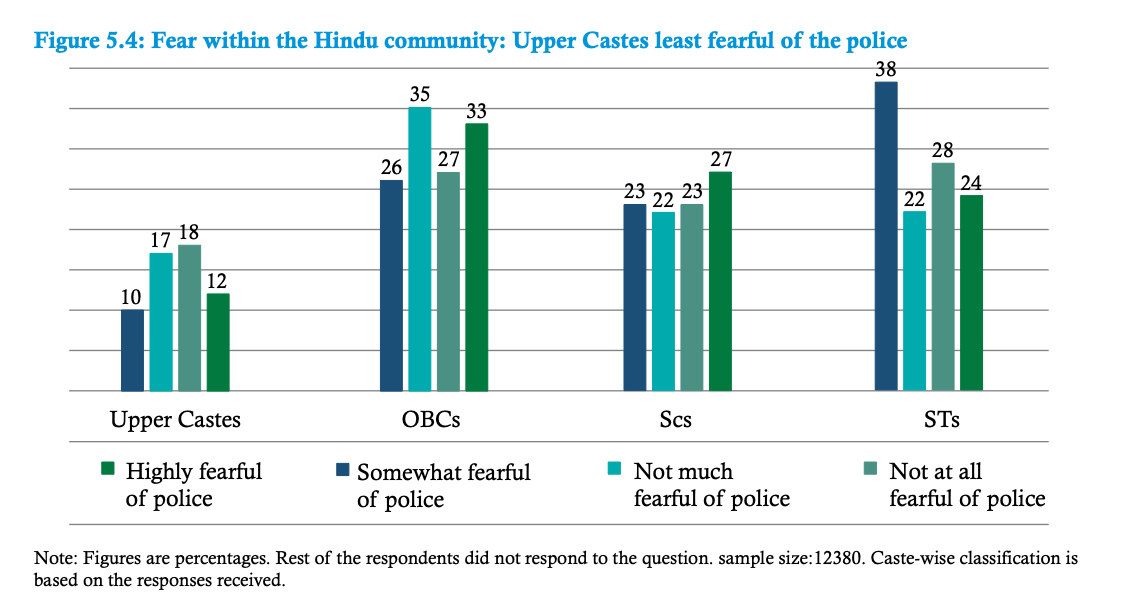
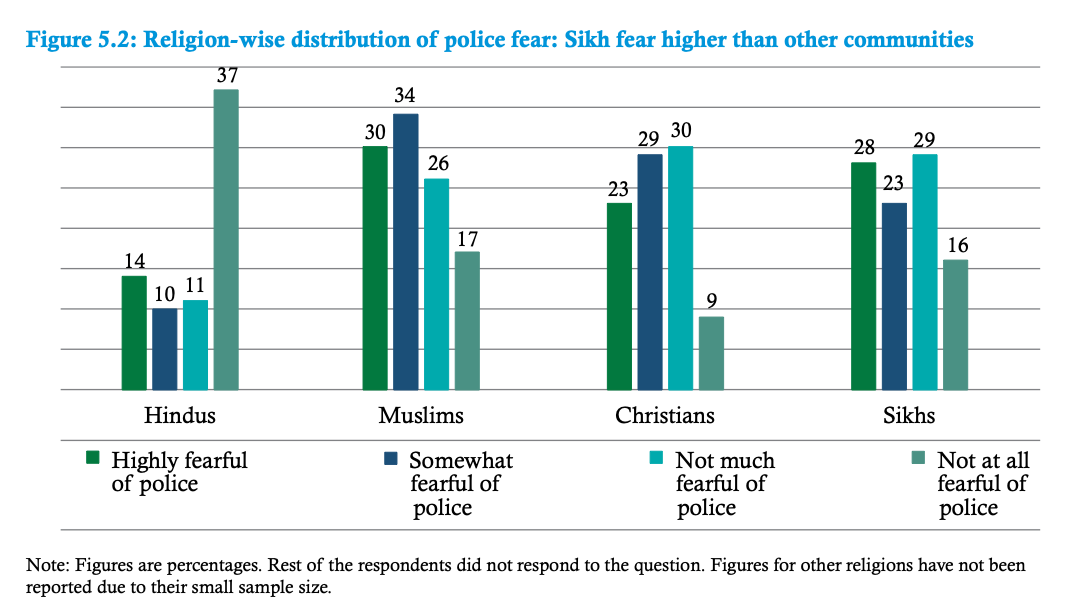
Source: SPIR, Performance and Perceptions on Policing, 2018. N=15563 from 22 states.
Surveillance and Privacy
a. Many agree to surveillance as the cost for safety.
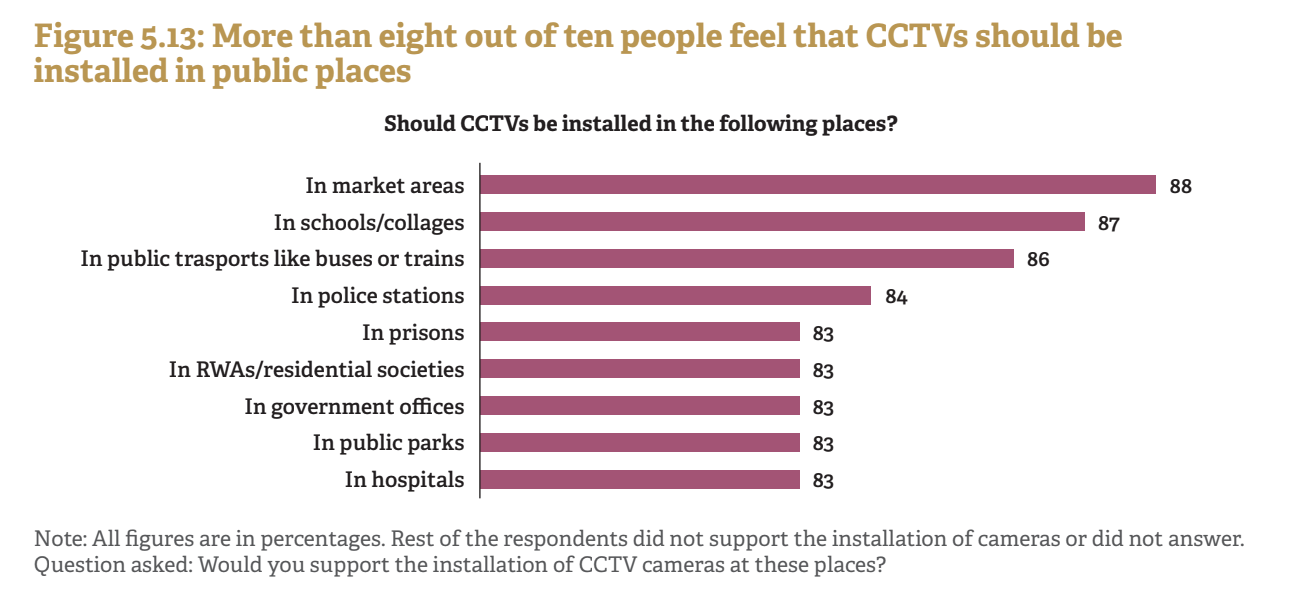
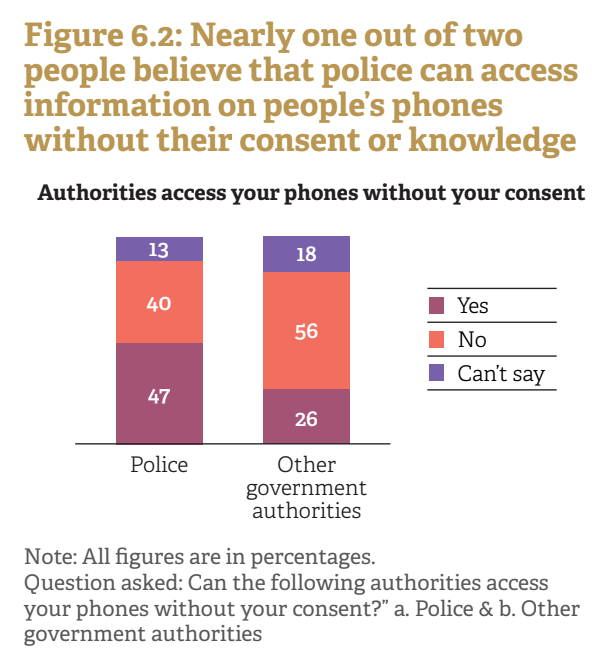
b. Very few people were aware of their privacy rights. Less than one in five people had ever heard of the K.S. Puttuswamy decision. But people remained deeply skeptical of concerns of privacy and illegitimate access to personal information by police and government authorities.
c. People remain scared of posting their political and social opinions online for fear of hurting group sentiments and subsequent legal action.
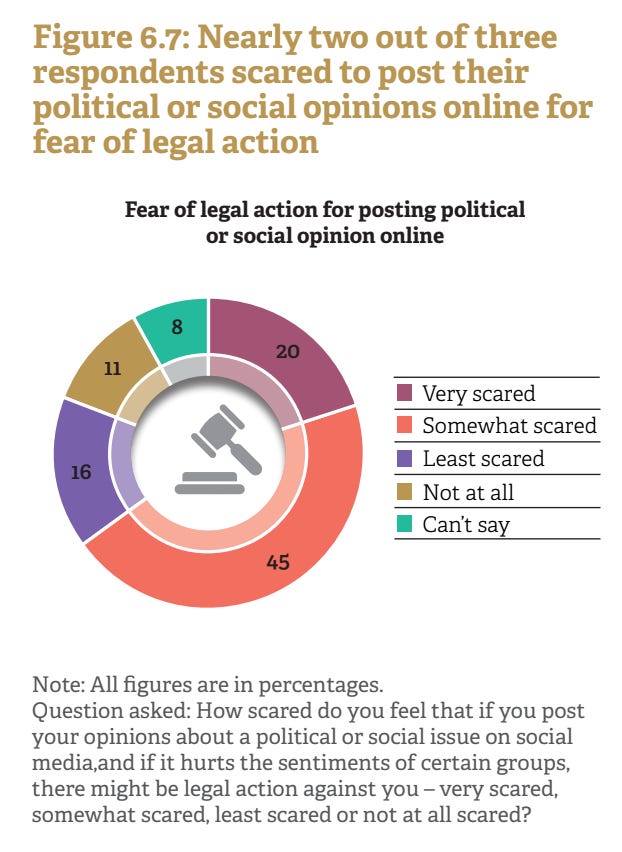
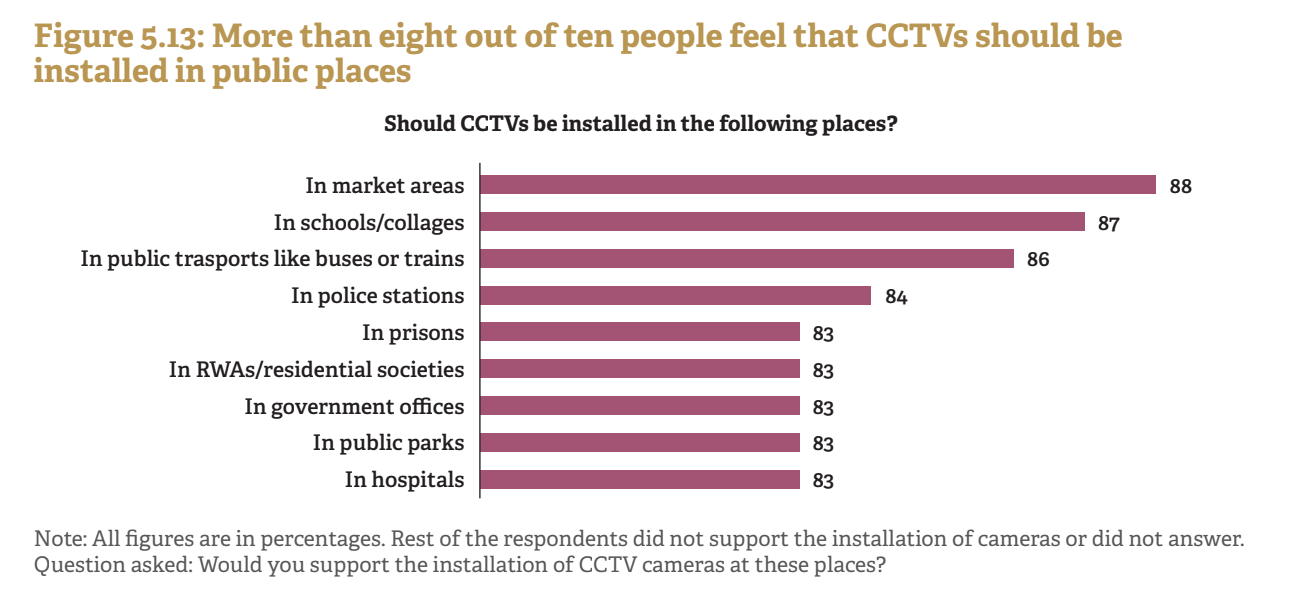
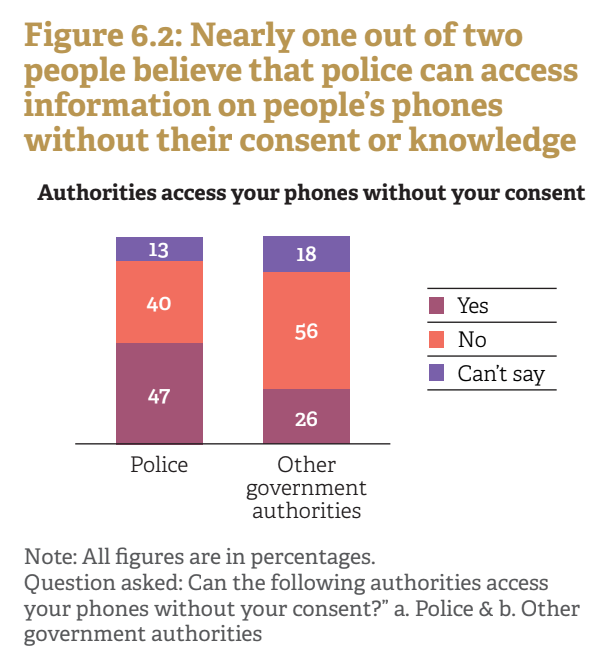
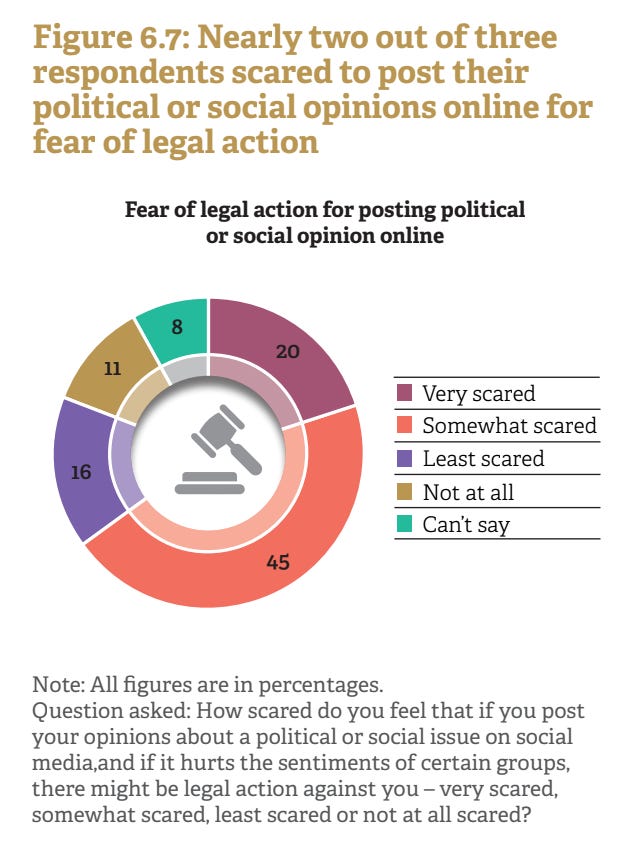
Source: SPIR, Surveillance and Privacy, 2023. N=9779, 12 states three citites in each and twelve localities sorted by income status in each city. Civilians only were surveyed, not police personnel.
LWE and Insurgency-related policing
a. In LWE areas, people’s perception of insurgency is more sympathetic to the insurgent groups than that of police personnel. But there is consensus that the methods adopted by insurgent groups are wrong. Likewise, differences are also seen in the perception of sovereign functions like taxing and running their own laws also exist between commoner residents and police personnel. This could possibly be because the intensity of exposure to naxal activity is very different for policemen and common people. Otherwise, it is an important reason for training and communication.
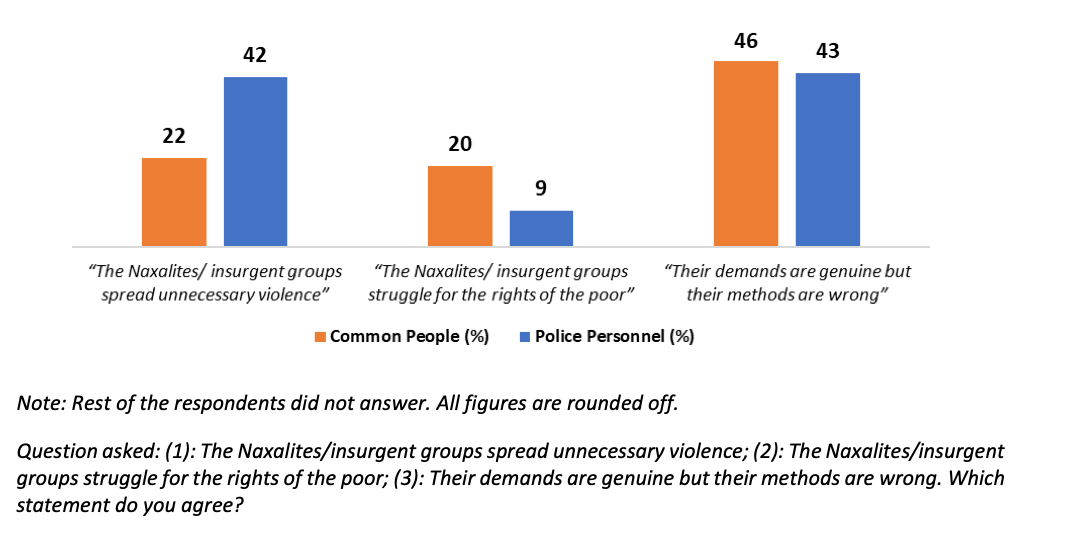
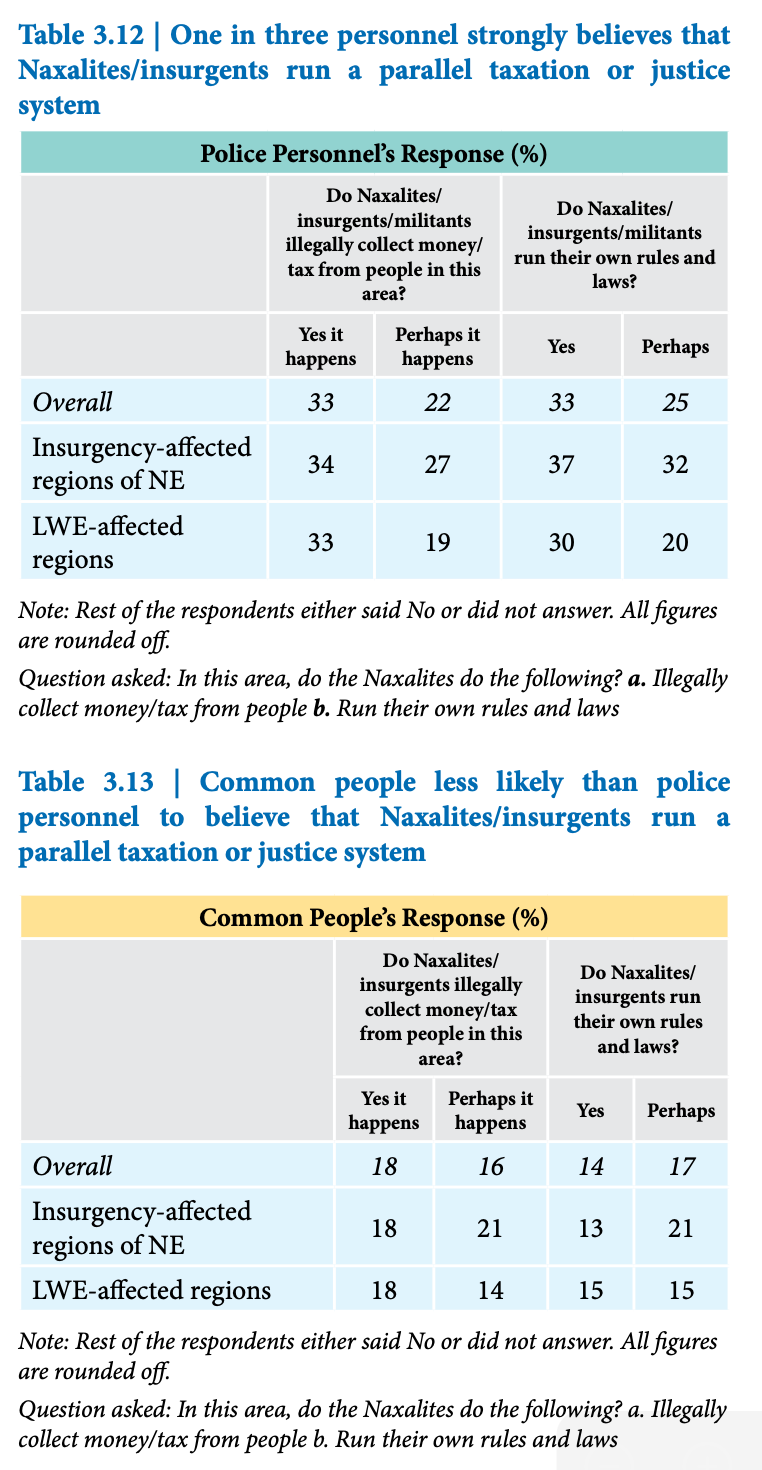
Source: SPRI, Policing in Conflict-affected conditions, 2020-21. N=6881. 4605 civilians and 2276 police personnel. This was conducted in 27 LWE and insurgency affected districts and 2 blocks in each district.
Working Conditions of Police
If you read just one report, make it this one. This report highlights very important issues about the service conditions of the Indian Police and their plight in service. A question well-asked is half-solved. This report provides a solid background about the service conditions of policemen.
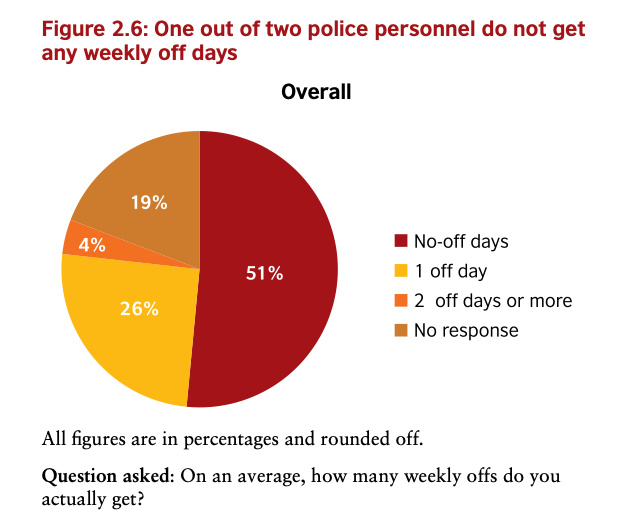
a. Police personnel in India are highly stressed, suffer from mental health issues, and are overworked.
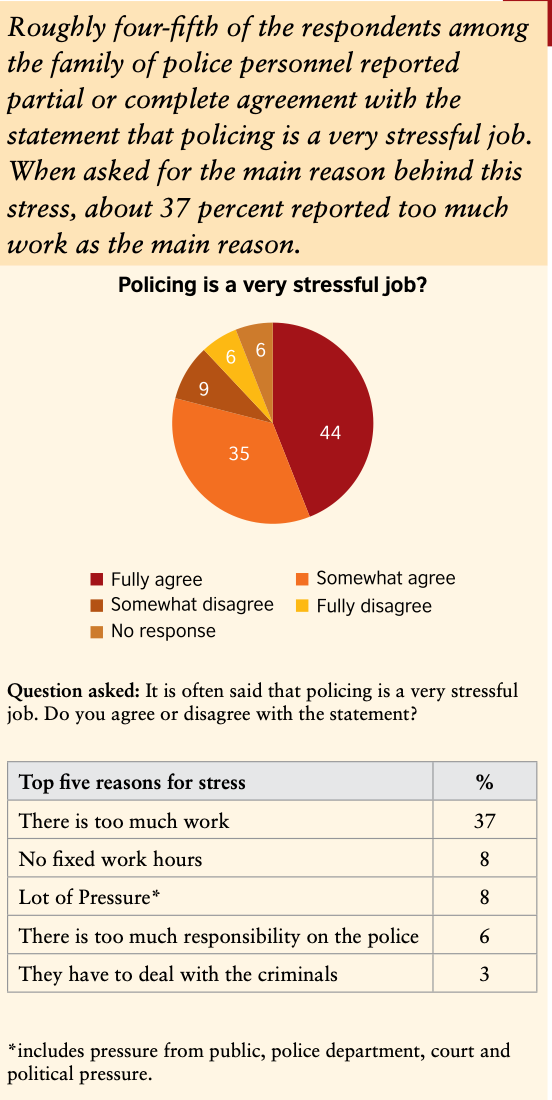
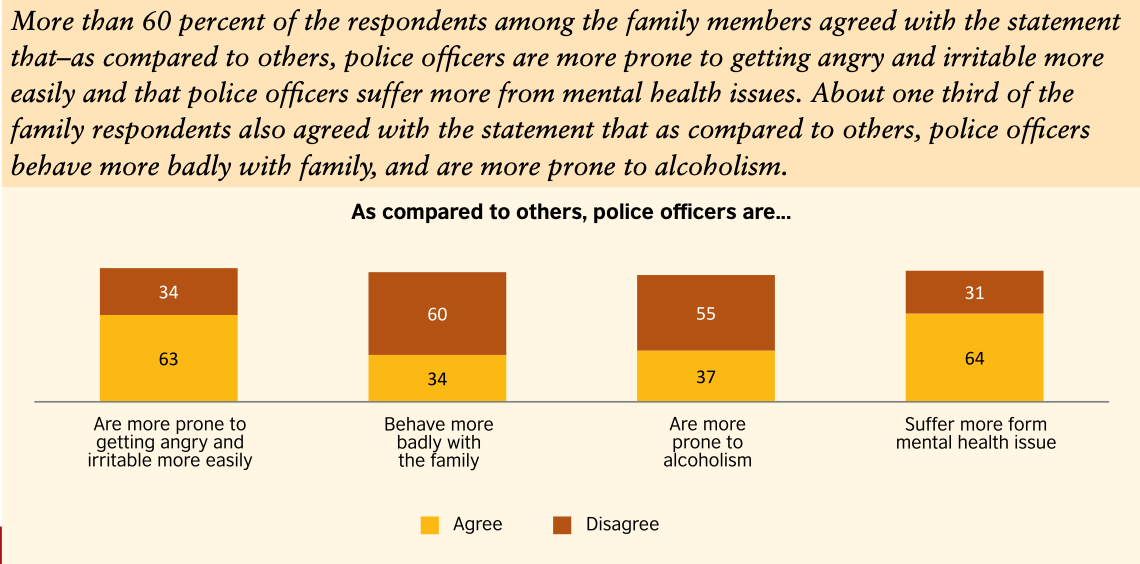
b. Police personnel get no leaves neither during the year, nor vacations. Their duty-hours are very high and popular perception co-incides with this picture.
c. Senior Officers asking juniors to do private personal household jobs is as common in the Police as it is in the Armed Forces. Given personnel are already overworked, this adds to their burden and may often offend their dignity.
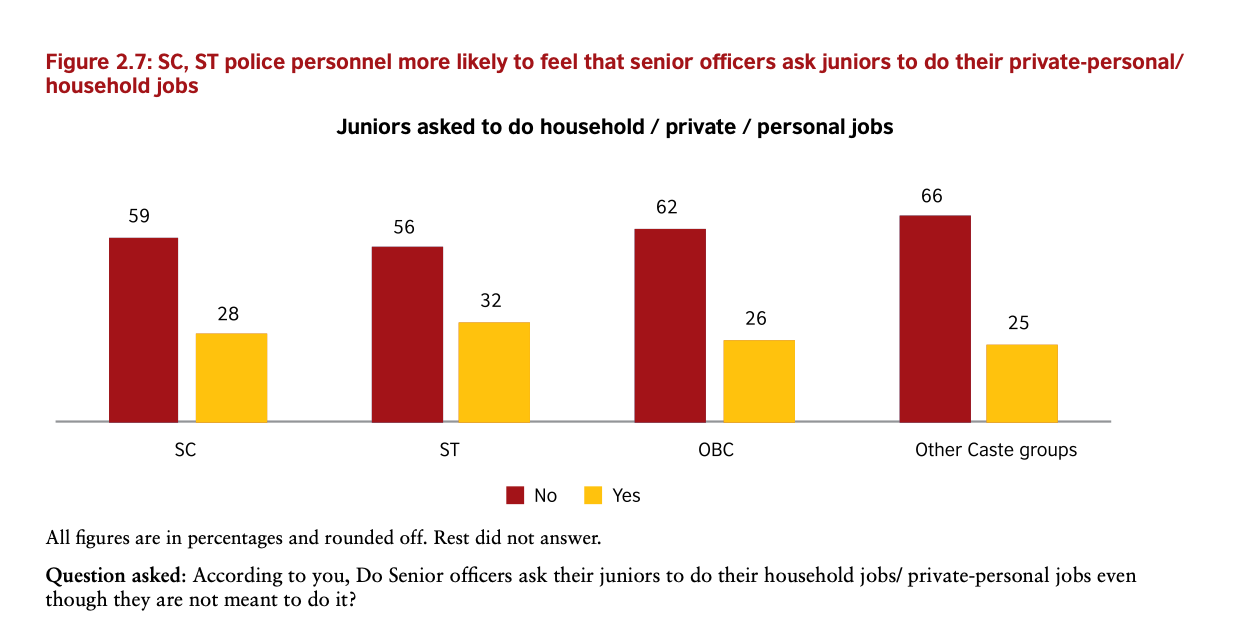
Source: SPRI, Working Conditions of Police, 2019 N=11,834 Police personnel across 105 locations and 22 states.
Centralised and Armed Policing v State Civilian Policing, Vacancies
a. Policing in India constitutionally is a state function and not that of the Union Government. It is enumerated in Entry Two of List Two of the Seventh Schedule. The Investigation and Policing powers available to the Union Government are limited in Entries Eight and 80 of List Two. The constitutionality of the Union Government employing police powers was decided in Navendra Kumar v Union of India by the Guwahati High Court (see discussion here). CBI was held to be unconstitutional. However, the decision was stayed by the Supreme Court in 2013 and has not been heard since. One only wonders what staying a constitutional writ for over a decade means.
b. In the meanwhile, central police forces continue to grow and have a disproportionate role in law and order and civilian security. These forces originally were paramilitary forces but are not designated as armed police as against civilian police. These are deployed by the Union government as and when required in states.
c. The SPIR, Policing in conflict-affected areas report referred to above provides us with some details on perception and functional differences between local civilian police and paramilitary forces.
d. The charts attached below demonstrate that the number of civilian police in India is roughly the same as armed reserve police. Central Armed Police Forces are 10.09 Lakh, add to that 8.87 Lakh District and State Armed Police, making a total of 18.96 Lakh Armed reserve police against 18.37 lakh civilian police. That is an important marker of a militarised, conflict-ridden and police-state.
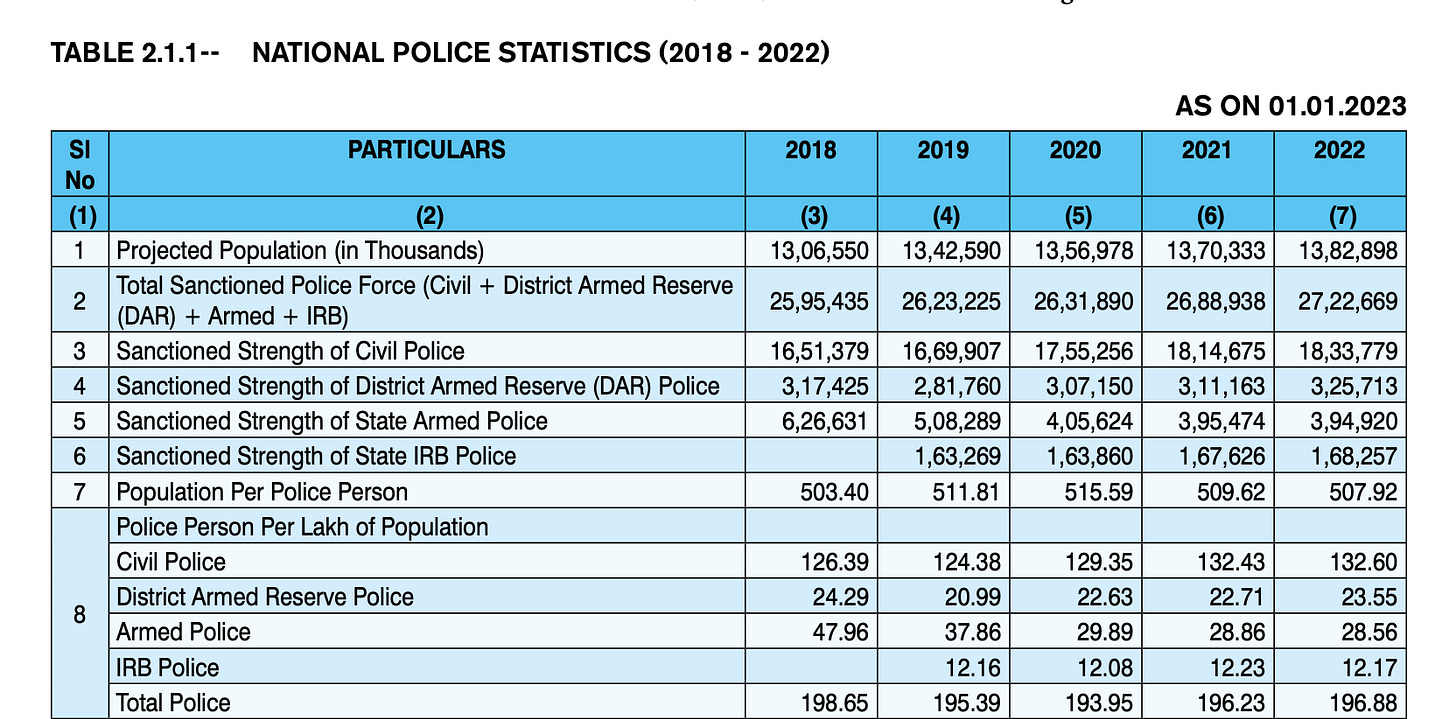
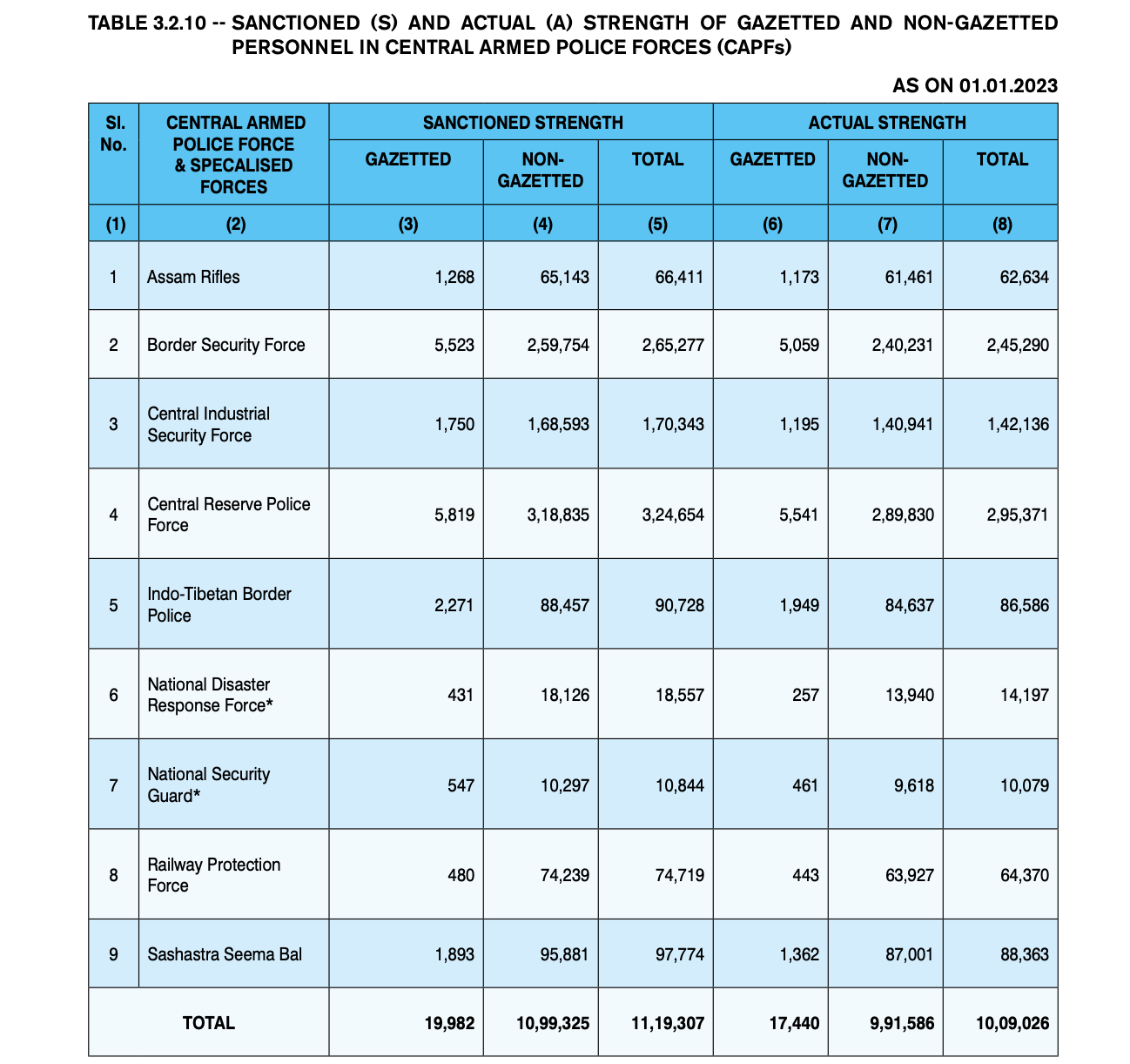
e. CAPF are 37% of the total sanctioned police force in the states in the face of constitutional federal design. Their designation if “other armed forces” and draw substantive power from Art. 355. But the Apex court has never applied itself to defining the scope of the entry “Police” in state list.
f. As per the BPRD report, there is a vacancy of over 5 Lakh Police personnel in the state police. Also see here. Deployment of central personnel is concentrated in some states, but none of them discharge functions of civilian policing. Civilian policing remains weak and in need of a rehaul.
For context, the following are the roles and purposes of the central armed police forces:
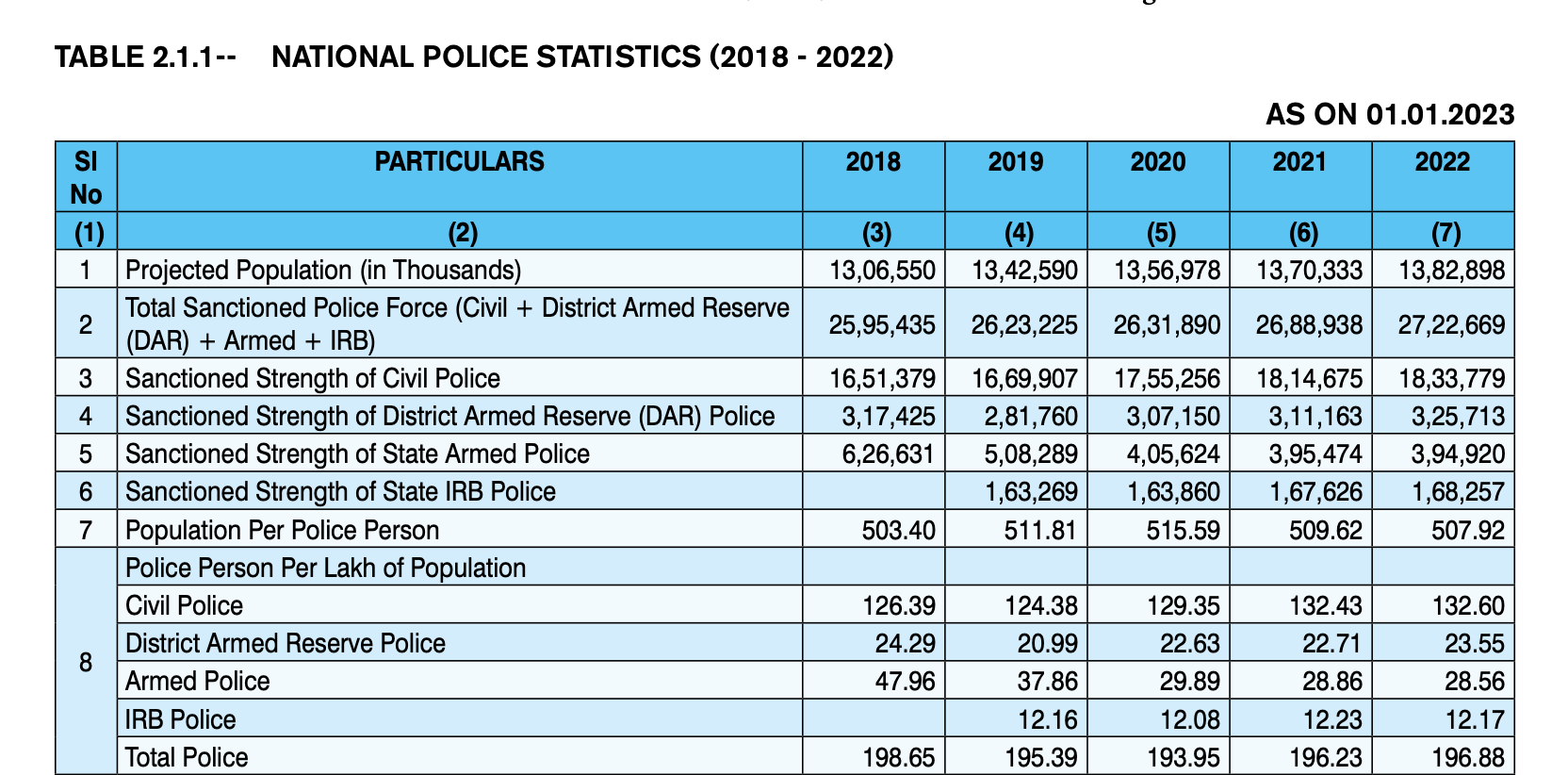
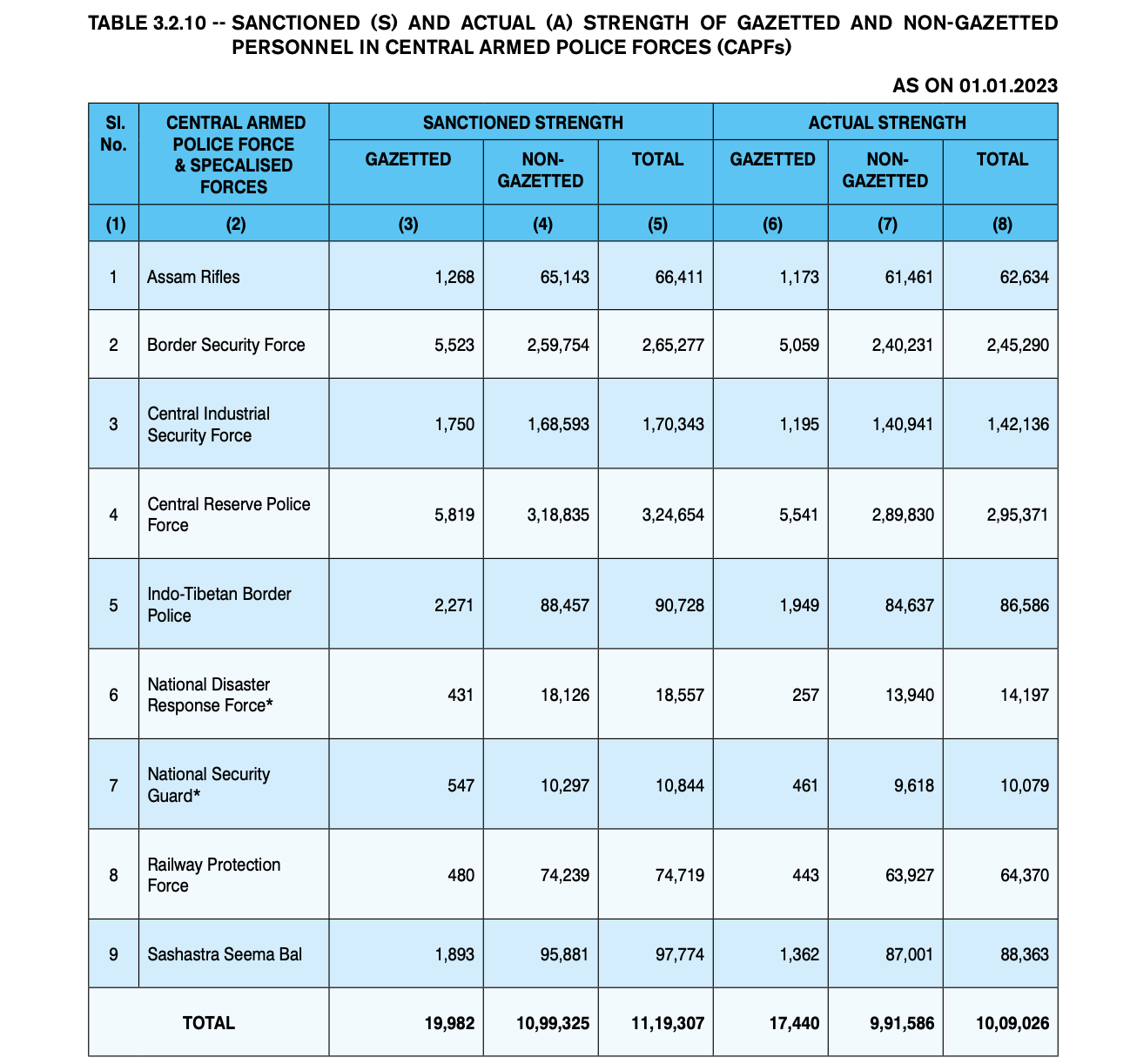
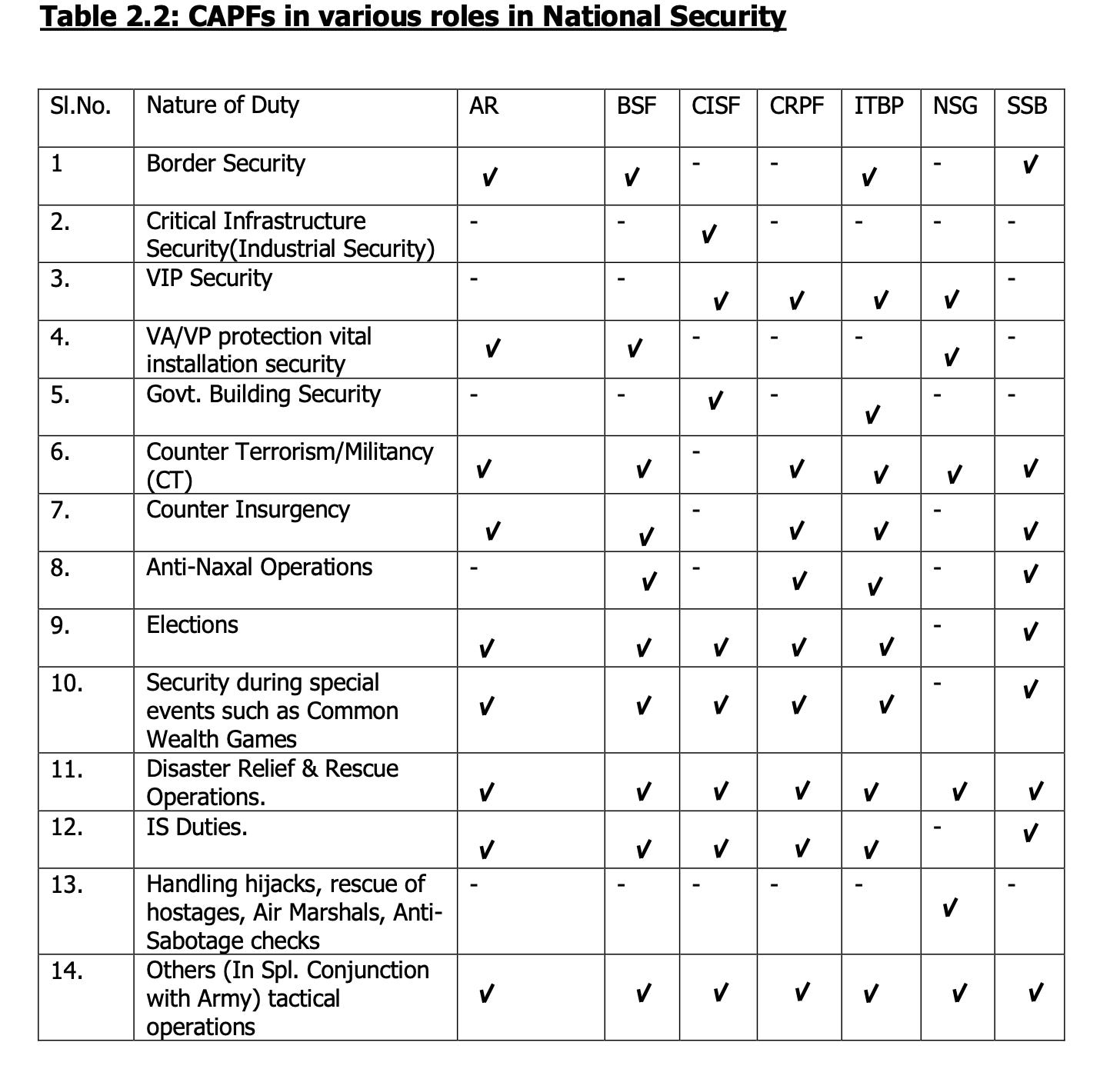
Source: Data on Police Organisations, 2023
Torture and use of force
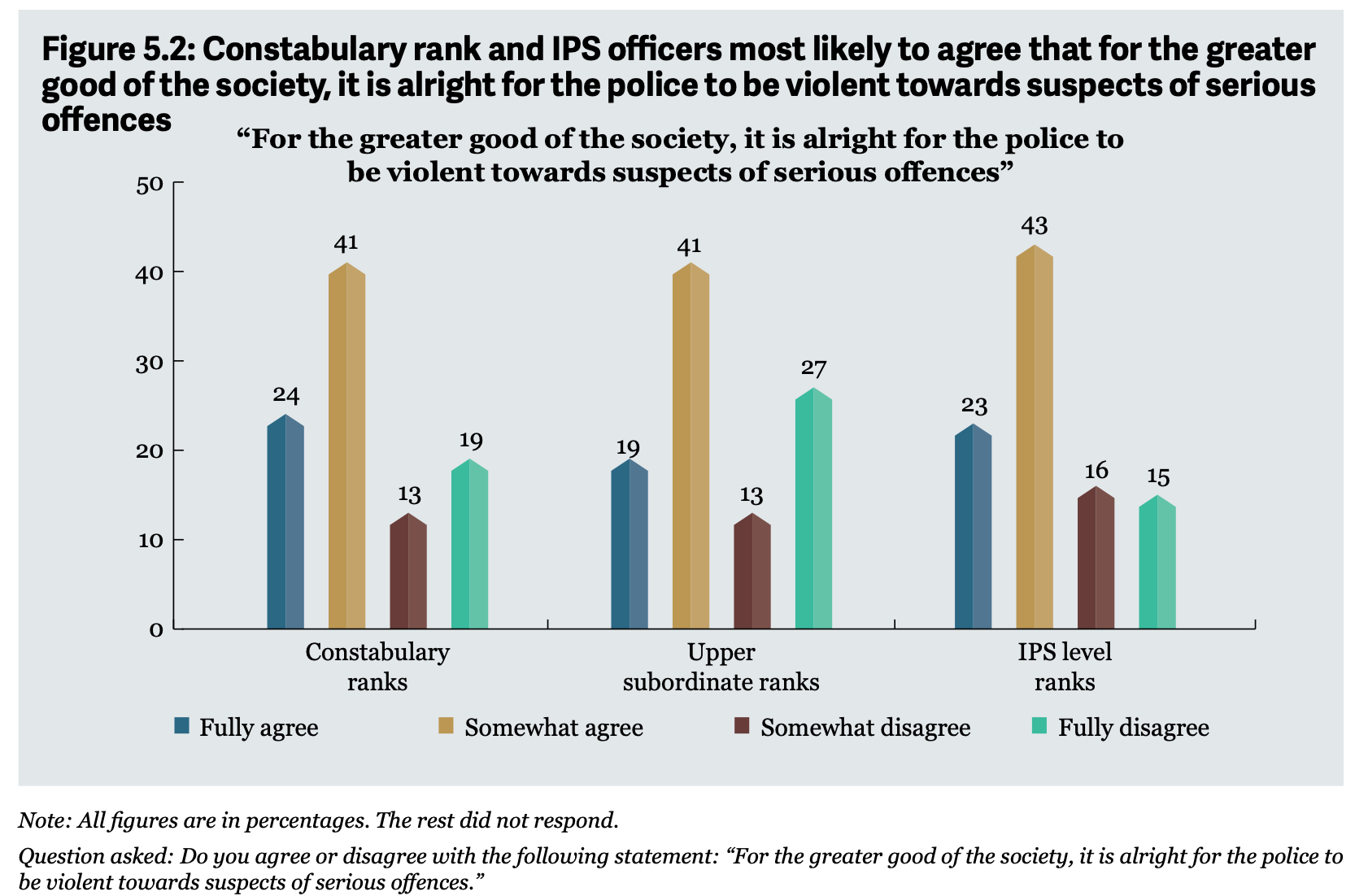
a. One in five policemen in India condone extra-judicial encounters. Half the reported encounters were fake. In that light, this latest report is crucial. Too many officers and personnel across ranks justify violence towards suspects. This is indicative of the prevalence of a militarised policing where suspicion of crime itself is sufficient ground for invoking violence. Procedural law is an aberrant inconvenience.
a. Force without fear is a useful model of policing in a capacity-strained policing. Control of crime and public security dominate fair trial and investigative concerns and take up most time of police personnel. What is seen and reported is acted upon. Crime control is top of the list of priorities. Annual surveys on city-wise crime rates make rounds in every national daily. Incentives do not add up to secure civil liberties and procedural sanctity. One in three personnel also agree, for example, that the lawyer should not be allowed to be present when an accused is examined by the police.
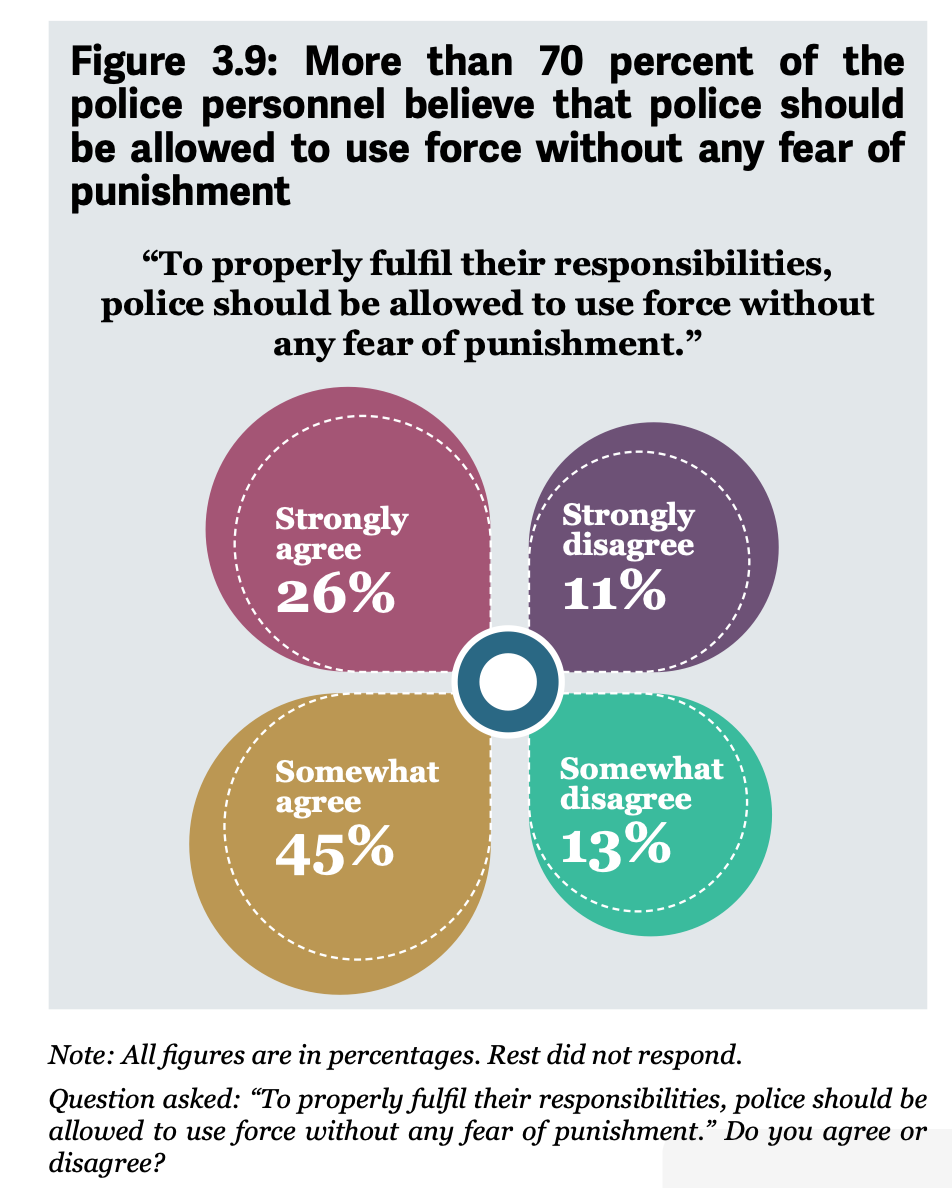
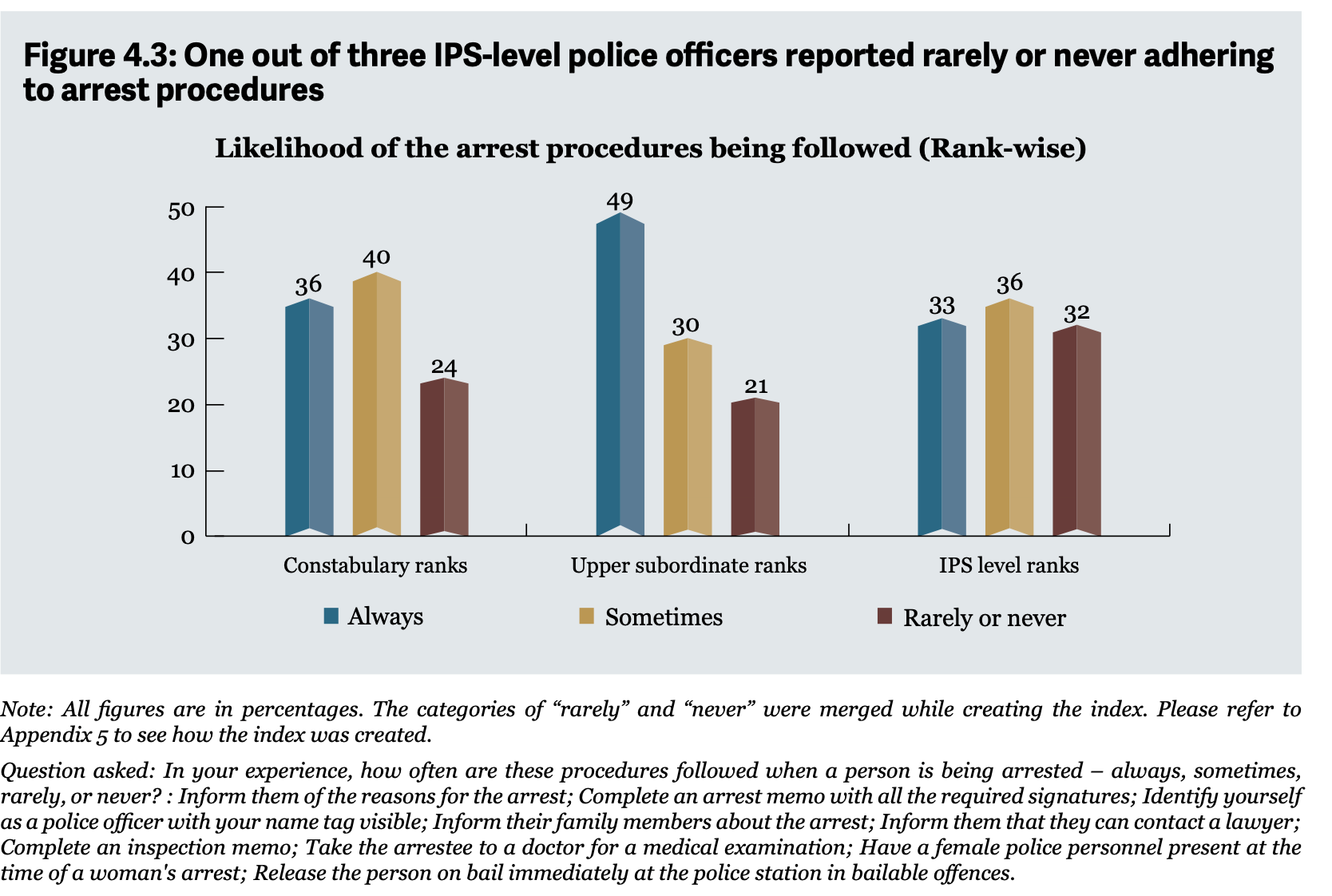
b. Arrest procedures laid down in Arnesh Kumar, 2014 are an inconvenience
c. Violence against suspects is justified across ranks
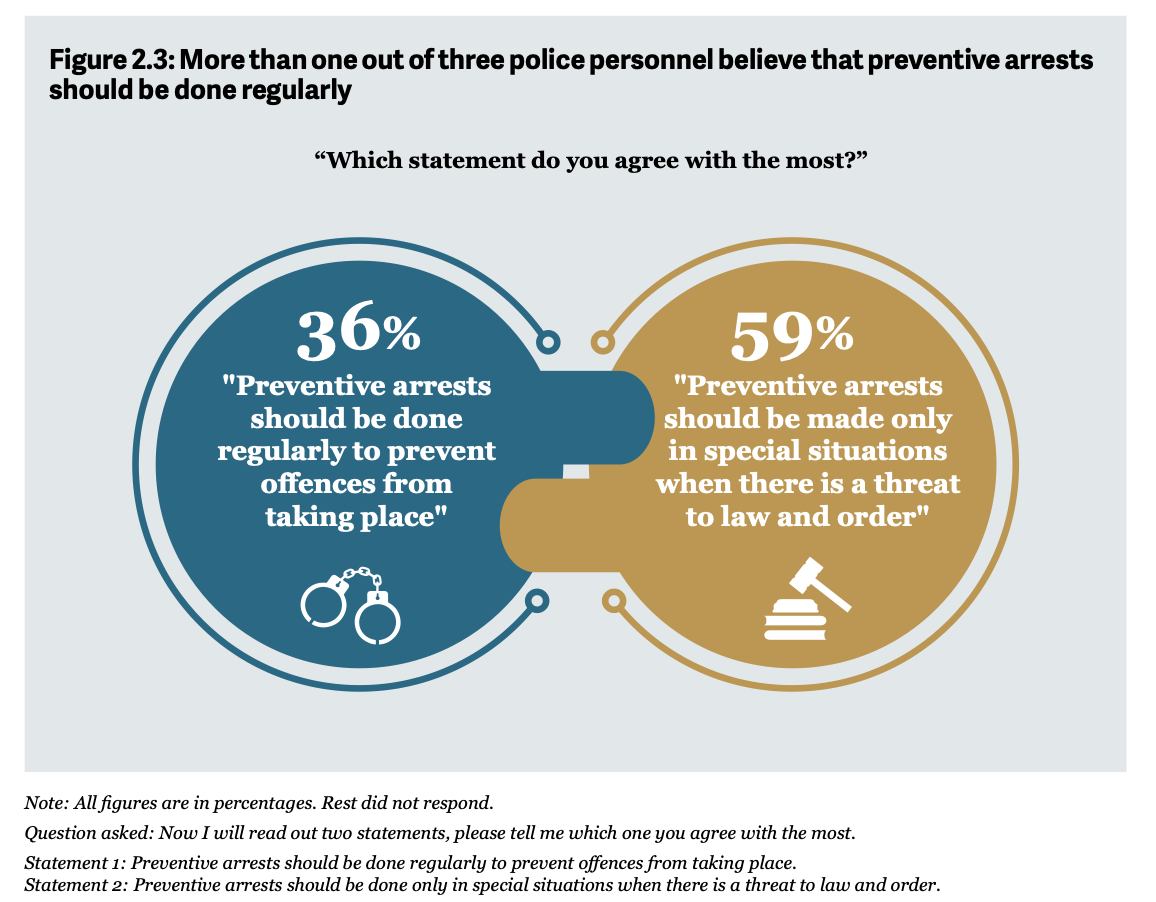
d. Offence prevention dominates. Regular Preventive Detention Justified.
Source: SIPR, Police Torture and (Un)accountability, 2025 N=8276 Police personnel across 82 locations across 16 states and one Union Territory.
Pandemic Policing— Capacity stretch means policing suffers. Police personnel suffer.
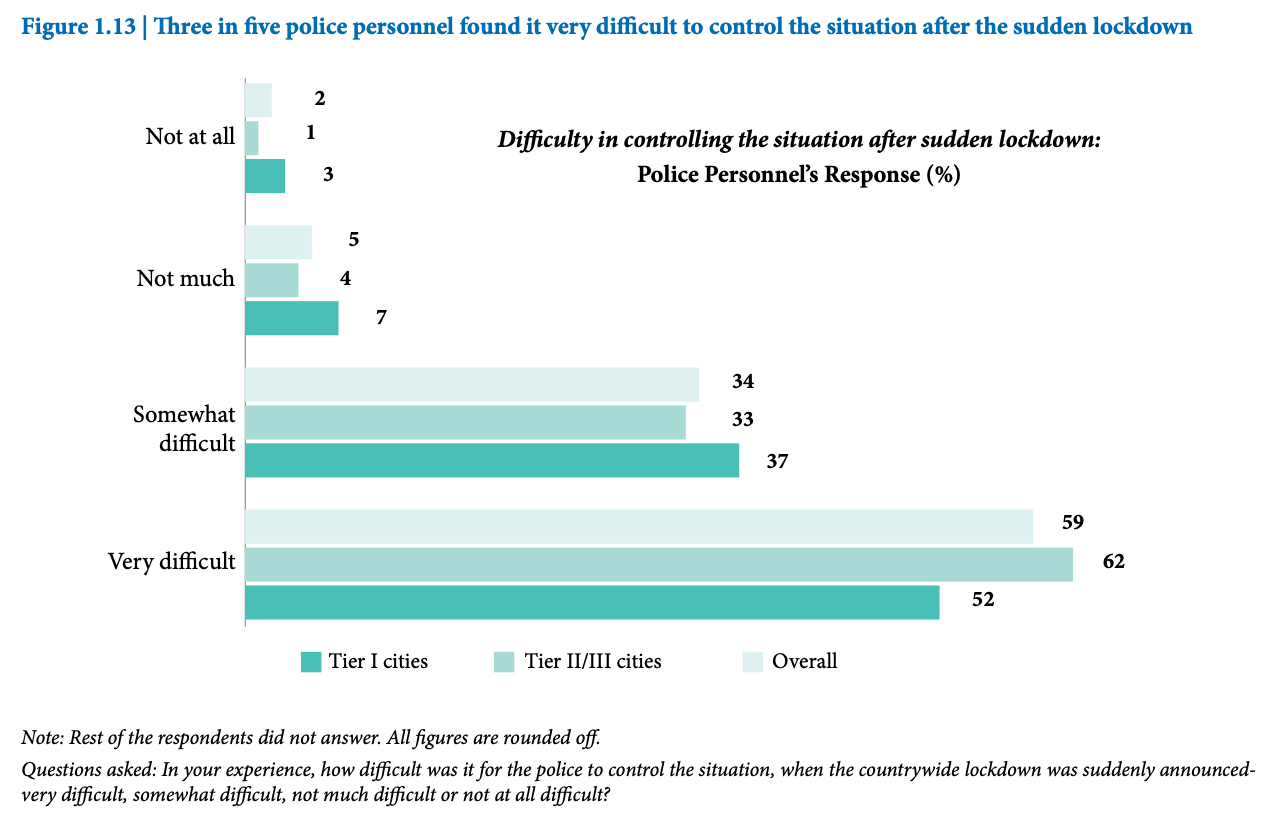
Source: SPRI, Policing in the pandemic, 2020-21. N=3607. The study was conducted in one Tier-1 and one Tier-2 or Tier-3 city in each state, and interviewed 240 civilians and 120 policemen in each state.
Militarised Culture?
I understand Militarism to mean the following:
The normalisation and glorification of disciplinarian, totalitarian and combative means and discourse in comprehending and solving essentially civilian political and social problems.
It is also manifest in militaristic personality traits and positions being deemed socially desirable. Employing strong-man adversarial masculinity combined with normalisation of violence in political and social spheres is also an outcome of militarism.
I am not proposing this as a diagnosis. It is merely a suggestive hypothesis. The evidence is mixed and non-representative. Besides, culture is the hardest to comprehend and simplify. But here is the data I will use to shape this hypothesis:
Respecting the Army is essential to Indian National Identity
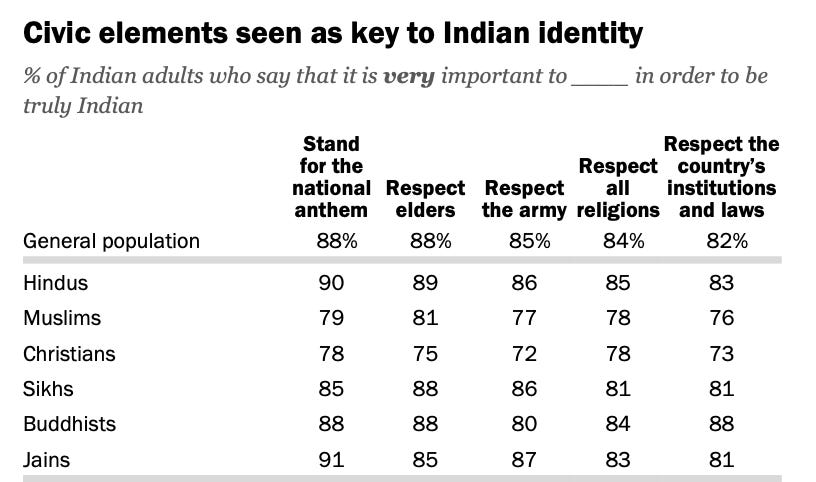
Source: PEW Religion in India: Tolerance and Segregation. N=30,100 dwellings adjusted by response rate.
Military Rule is a popular alternative in India
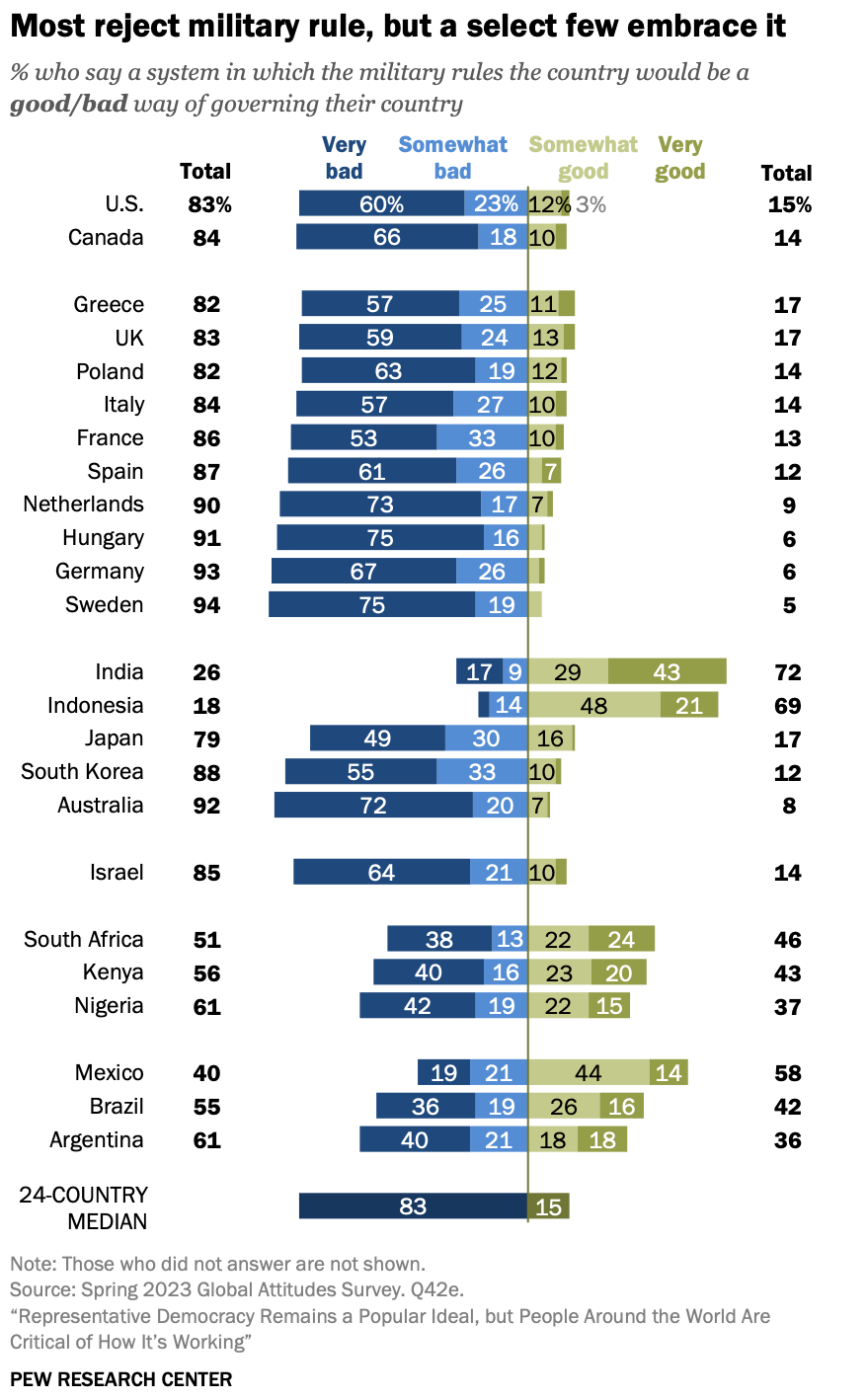
Source: PEW Global Attitudes Survey, 2024. N=3,559 for India.
10. The Army is amongst the most trusted institutions in India, and enjoys higher trust than the courts
Methodologically, this depends on what image the Army generates as a survey prompt. It could potentially remind the respondent of their community-person in the armed forces. But if this is really the picture of people’s true belief, this is a deeply problematic political diagnosis. It risks being the foremost cause of the militarization of ideals and vocabulary becoming normalised.
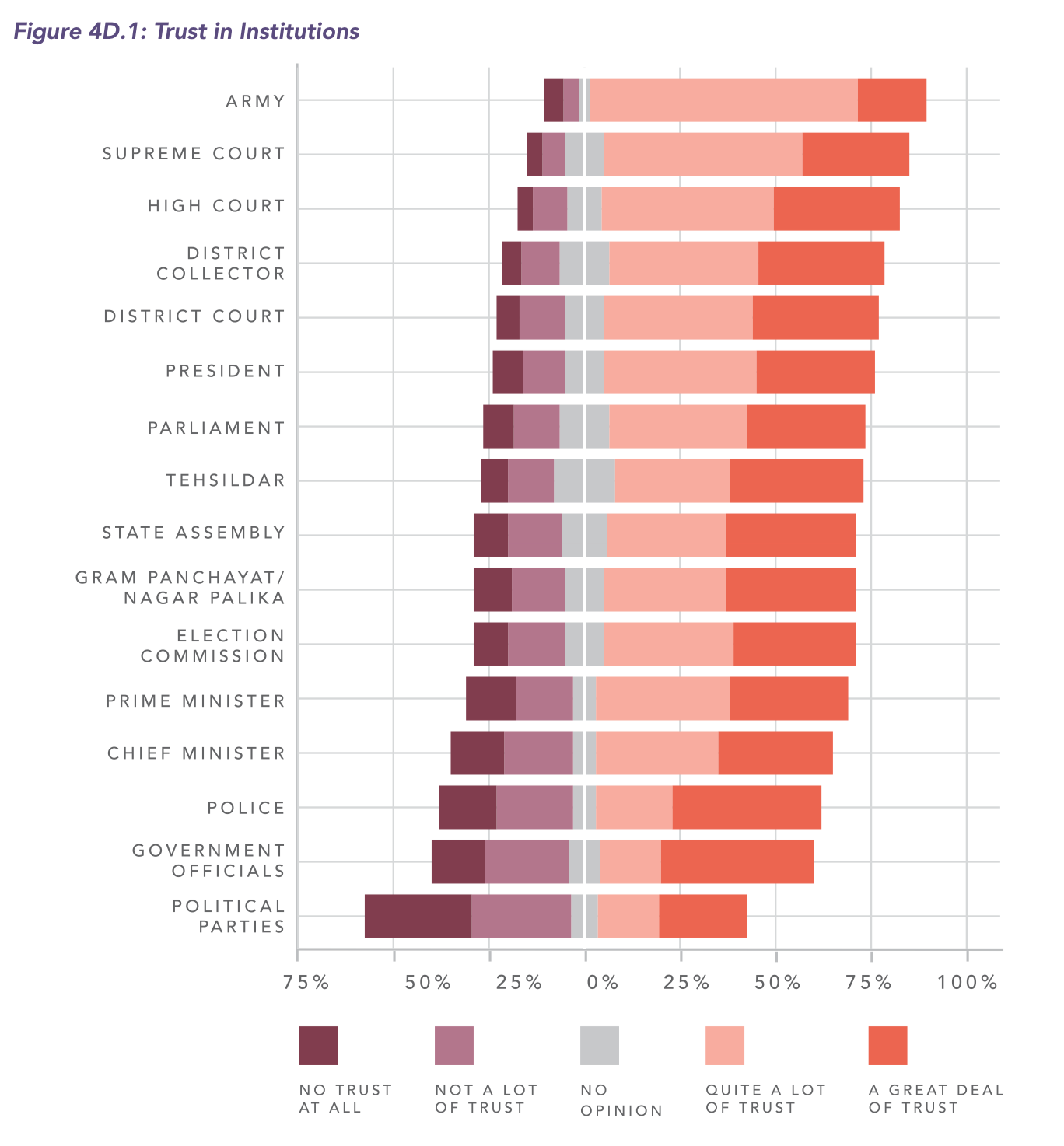
Source: Politics and Society between Elections, 2019. N=24092 in 22 assembly constituencies each across 12 states.
10. Young Adolescents’ Life Aspirations
a. 28% of male 14-17 year olds aspire to be Policemen and Army Personnel in Rural India. If we exclude the respondents who don’t know, it is 35% of young adolescents aspiring to join the army and police. One reason, doubtless, is financial security. But it remains a respectful and glamorised professional choice.
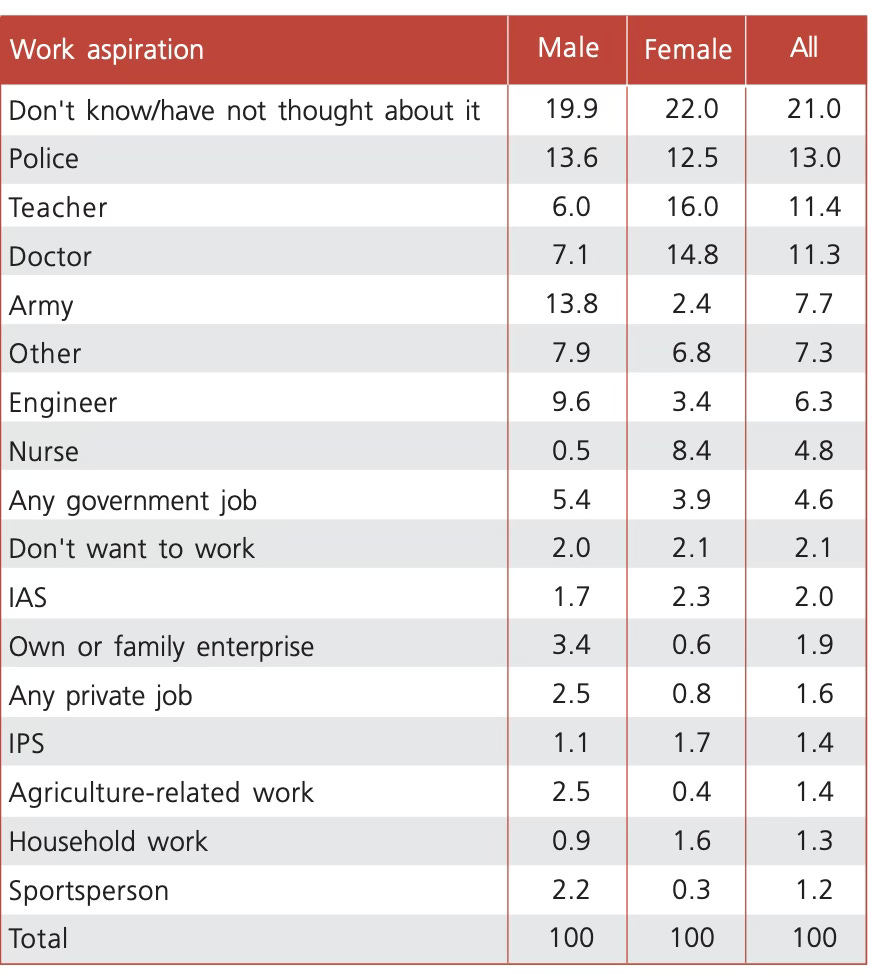
For a detailed city-wise report, see table 52 on pg. 67-68 in document linked above. Figures for Uttarakhand and some North-Eastern villages are peculiar in their bend towards working in Army.
Source: ASER 2023. Aspirations of Adolescents. N=30,000 youth in 28 districts with 60 villages in each district. Two-stage sampling.
b. The proportion falls in some smaller, less representative and urban-rural mix survey of 15-34 year olds
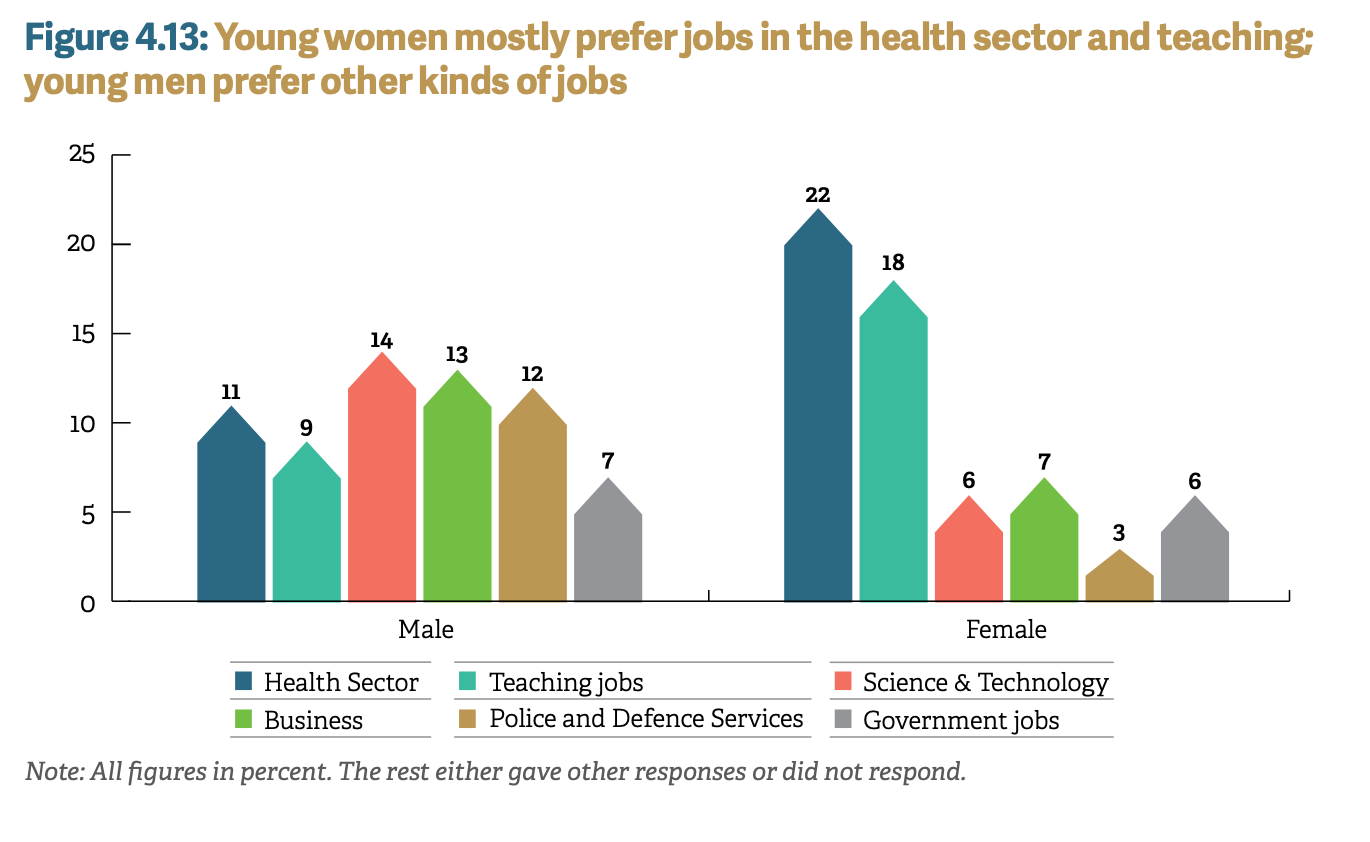
Source: Indian Youth in the Post-Pandemic World. N= 9313 youth between 15-34 years of age. Urban and Rural Localities.
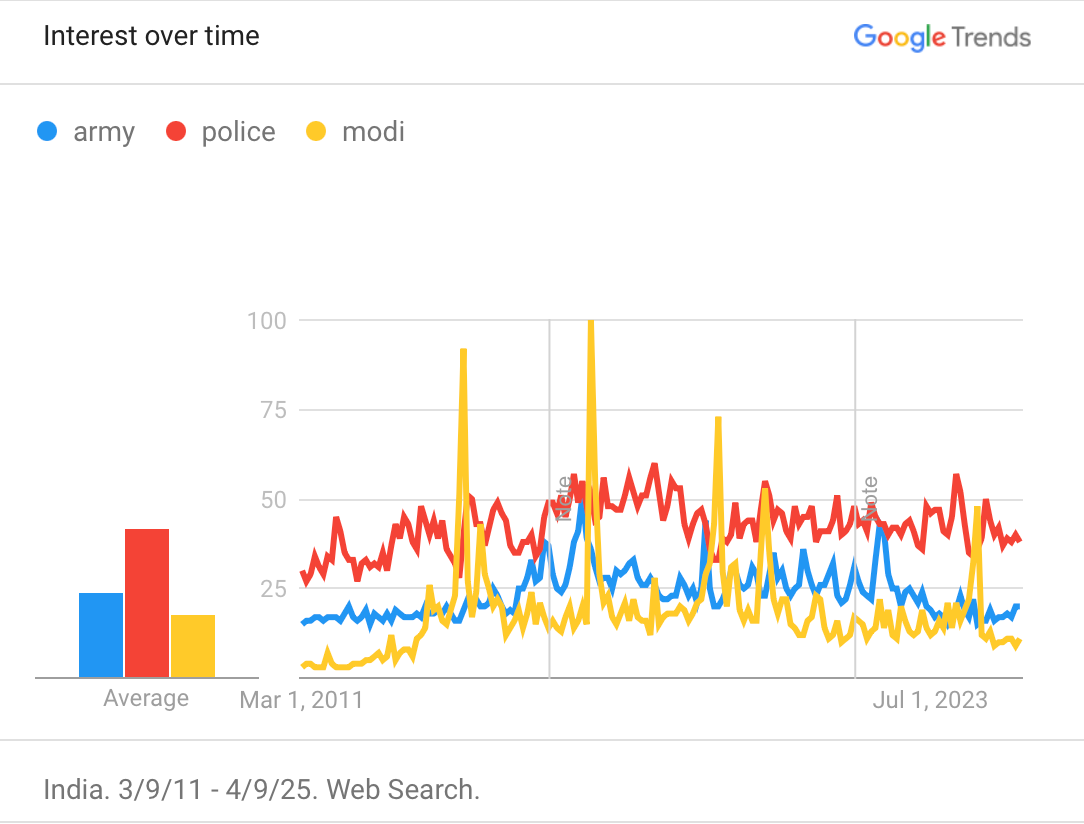
Google trends show the Army and, Police are more popular searches than Modi
Google Trends search results also reveal some important things about these trends. I encourage you to toy with it and draw your conclusions.
I found that the army and police were more popular searches than Bollywood, ShahRukh, UPSC, gold price, jyotish, vaastu, Modi and BJP. Army and police were often accompanied bharati, job, but also videos, movies and wallpapers. YouTube searches are also instructive.
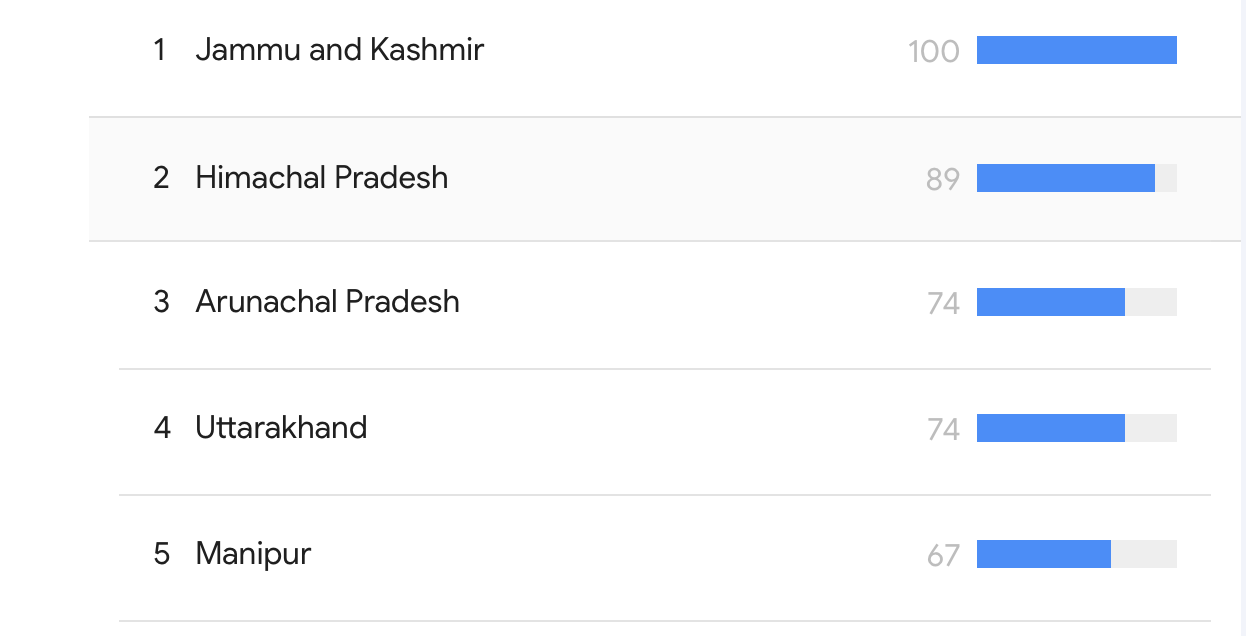
The Army is most searched in these states. These are states where joining the army is a very popular and culturally celebrated vocation (Himachal and Uttarakhand) or where the Army has an active presence.
Finally, I now urge you to look up these Wikipedia stubs on Military Films in India and Police Films in India. Think about all of these you have watched.
Will we ever move to modern civilian policing that has burdens better than crime control? Policing in India remains a stressful and difficult job. The admixture of civilian and armed policing is lopsided and flawed. People fear the police and are also likely to be subjected to biased policing and extorted by the police.
We need a country-wide assessment survey of officials, and on public perceptions about the organisation in all branches of public bureaucracy, but especially, in police. If a trust-deficit-crisis is to be avoided and further descent into a police-state is to be thwarted, a thorough and representative survey that helps us diagnose the crisis is a necessary first step.
Fin.